Day 5

Quote

Day 5

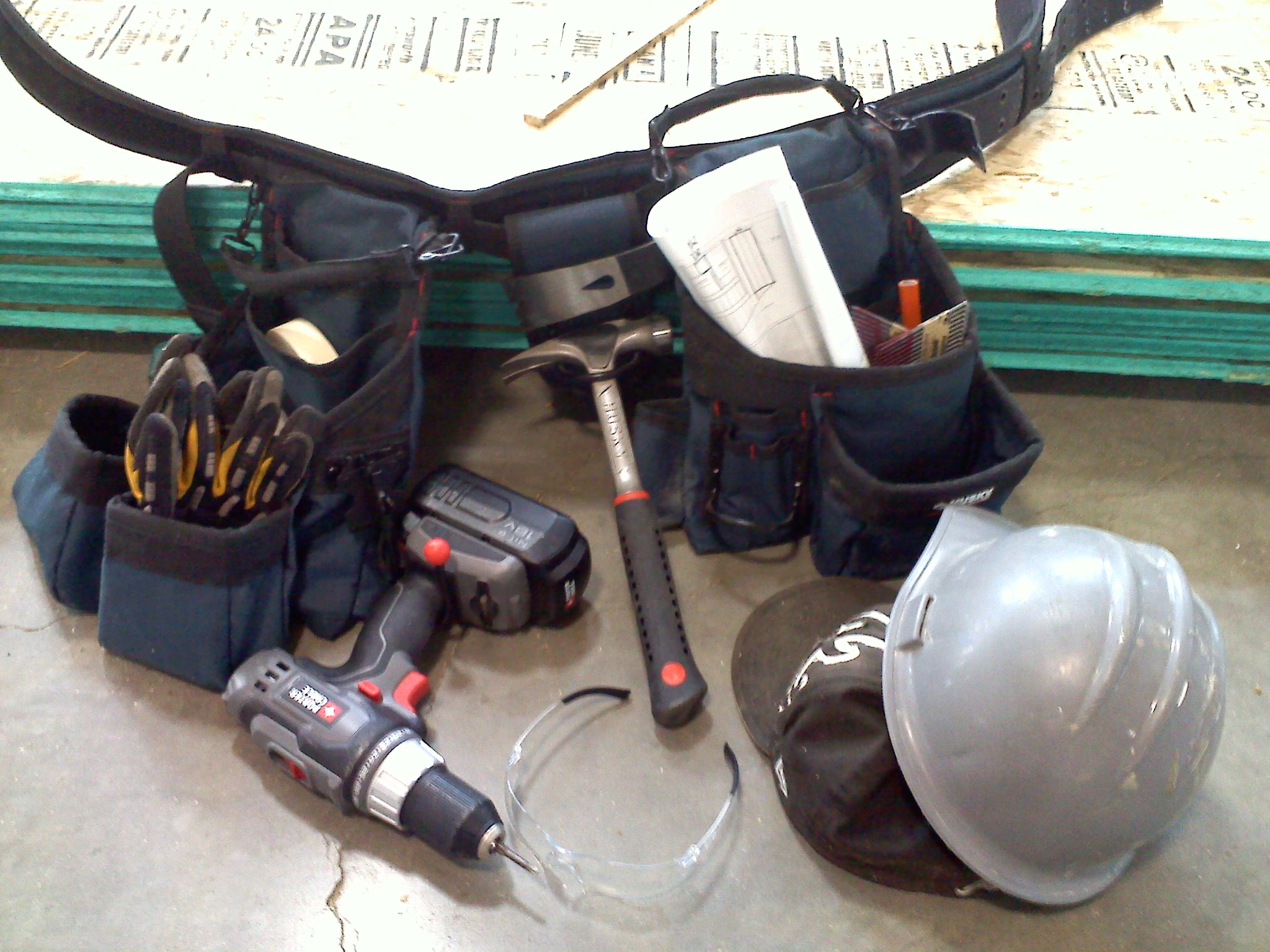
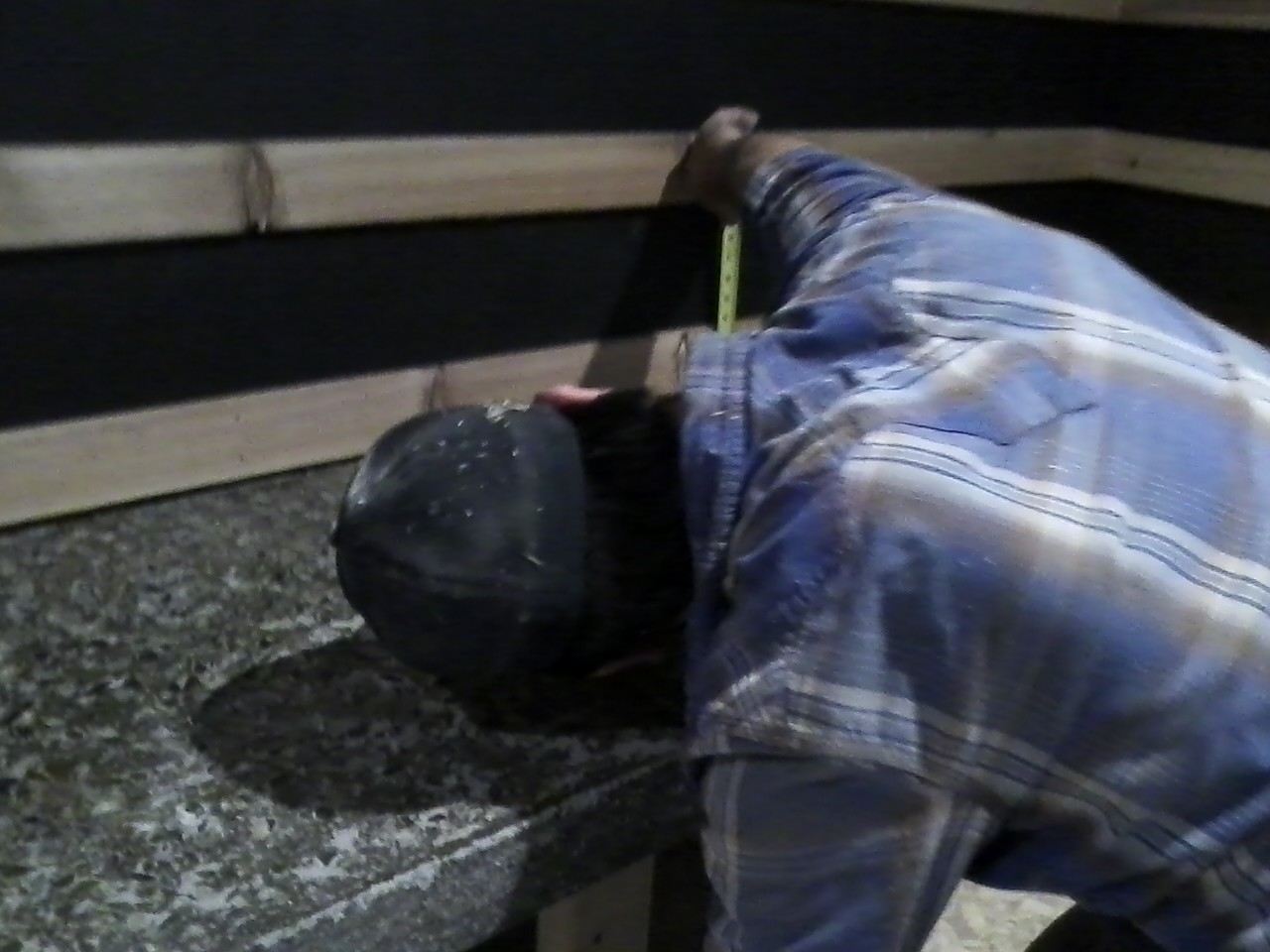
We are now switching to framing work on the east and west wall.  The newest addition to my tool belt was the framing plans.  Since there were only two sets on side, it was always tiring trying to locate them.  So I printed my own.  We have found a great location for our crowbars.  Located on the right side of my belt.  You can see that I have a large amount of nails in my right pocket.  This was a case of just picking up the nail gun trying my best.  Now I can say I am pretty comfortable with one, considering my limited use.

When we raised the north wall, it gets really heavy if you have the highest handgrip.

Goal: Get better adjusted to tools I have had limited use of, namely: skill saw, finish nail gun and saws-all

Day 4

Quote

Day 4 –

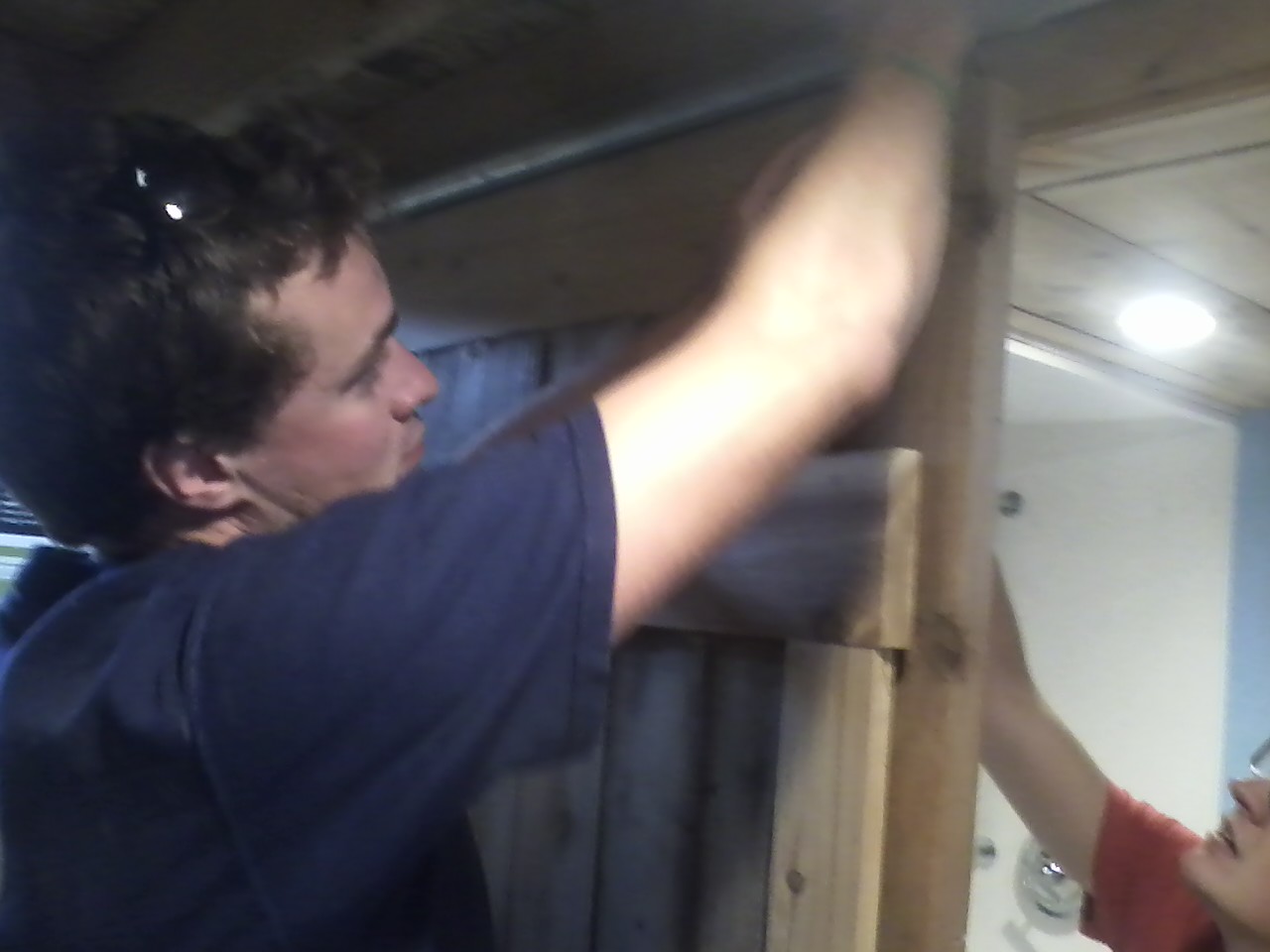
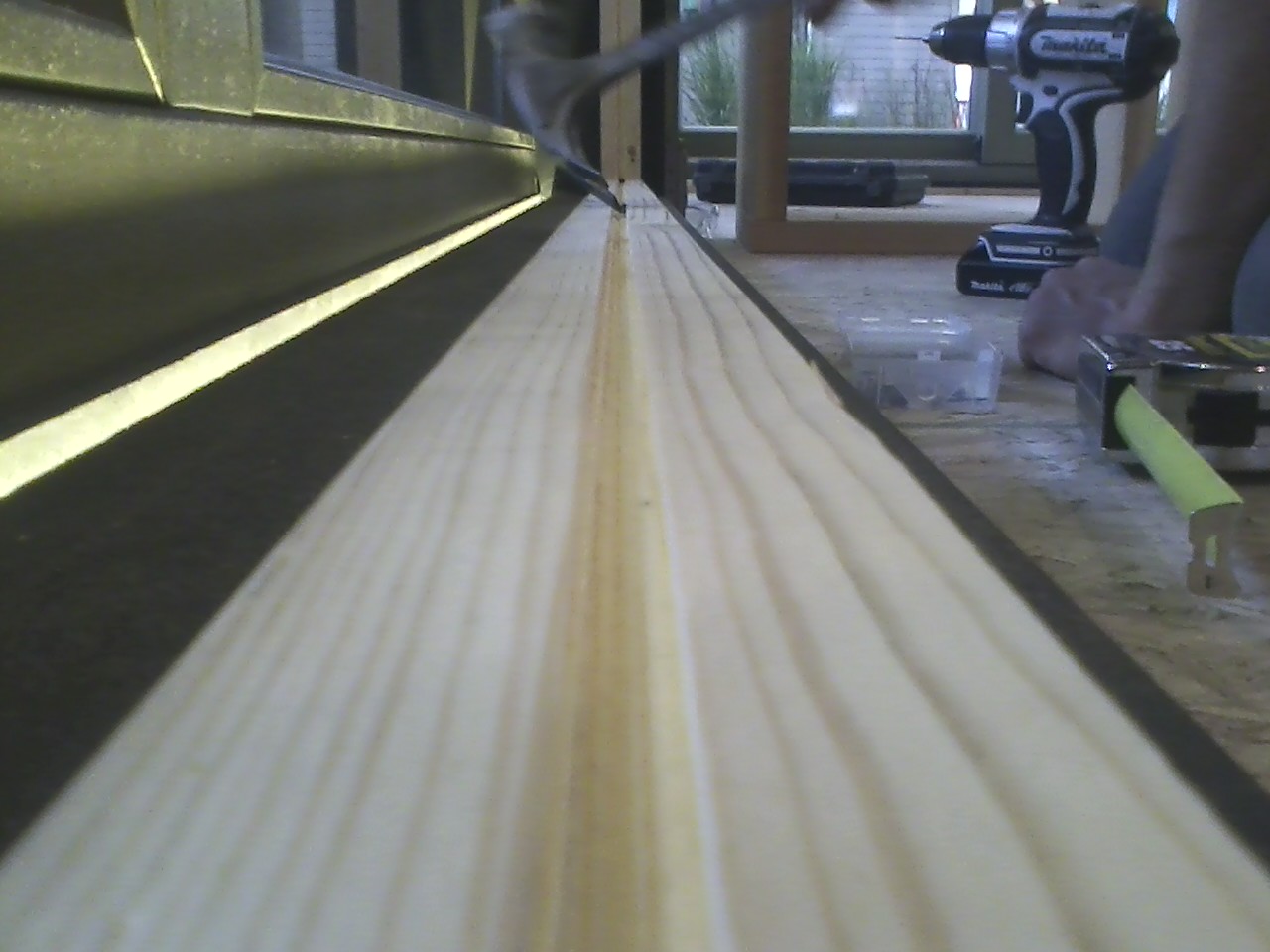
Today involved finishing the large column work on the south, east and west sides.  The large 36-watt driver was a force to recon with.  It imposed its will upon any screw that got in its way, however it was rather heavy.  It was the only tool that could sink the 6-inch screws into the columns.  We started attaching the headers after the columns were lined up and true.  For the header work I switched to a smaller impact driver.  This little driver did wonders even though I never sounded very nice.

Goal: step up for a job where ever and when ever I can

Day 2

Quote

Confucius wrote: “Learning without thought is labor lost; thought without learning is perilous.” 

Progression through experience, already changes are being made on my belt. The hammer as you can see has been moved to the right side of the belt so that it is more easily accessed.  I have added a water bottle that can be easily used because the day has been getting progressively hotter.  The spilt pockets on the left side have been over flowing with screws.  Lastly I have my drill gun hanging on the left side.  This does add extra weight but in order to be working you need every tool that can get the job done.

Day 1 started by doing some less then fashionable jobs, so I am changing that.

Goal 2:  Stock my belt so that I may step in and do any job available. 

Quote

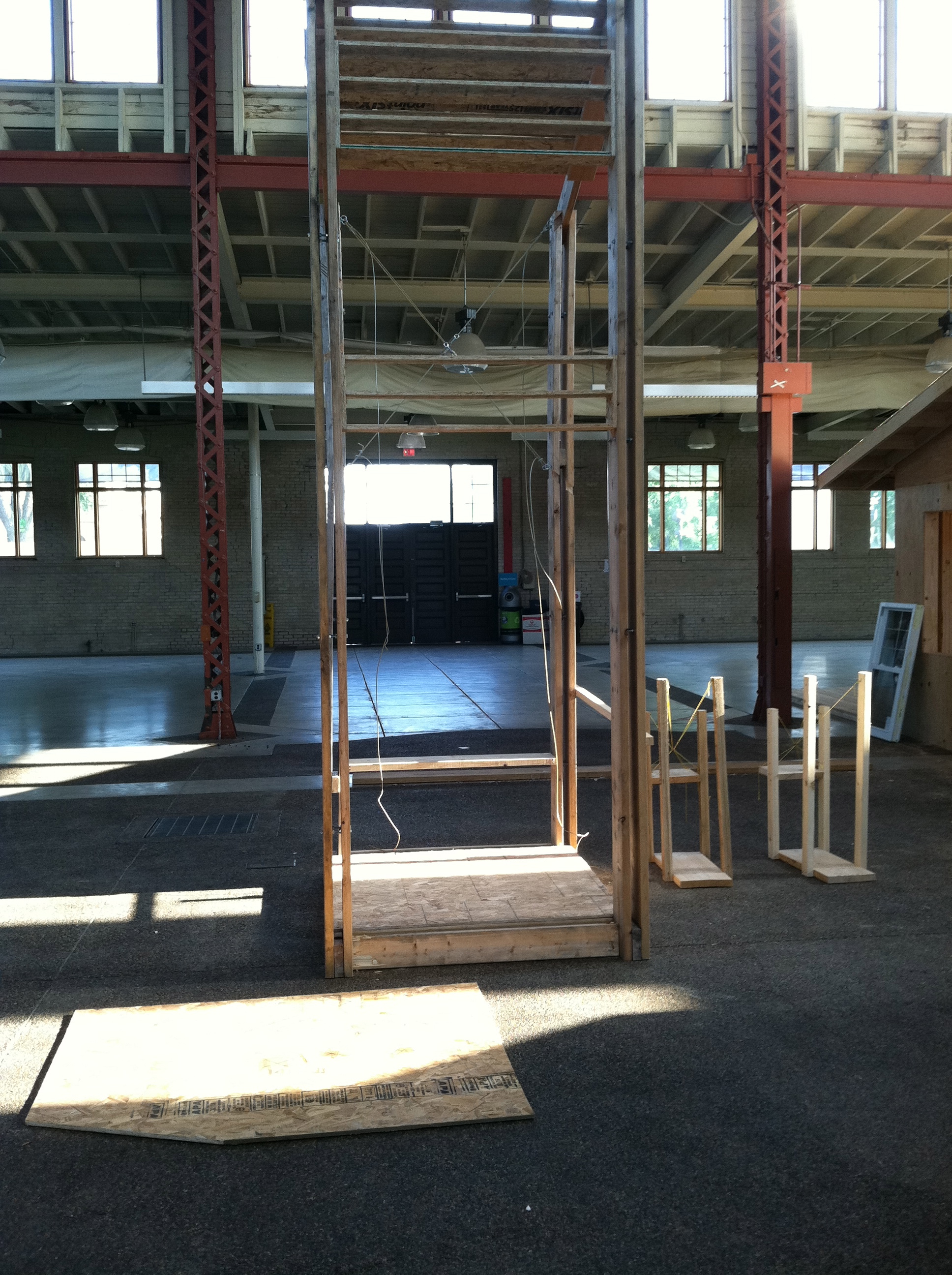
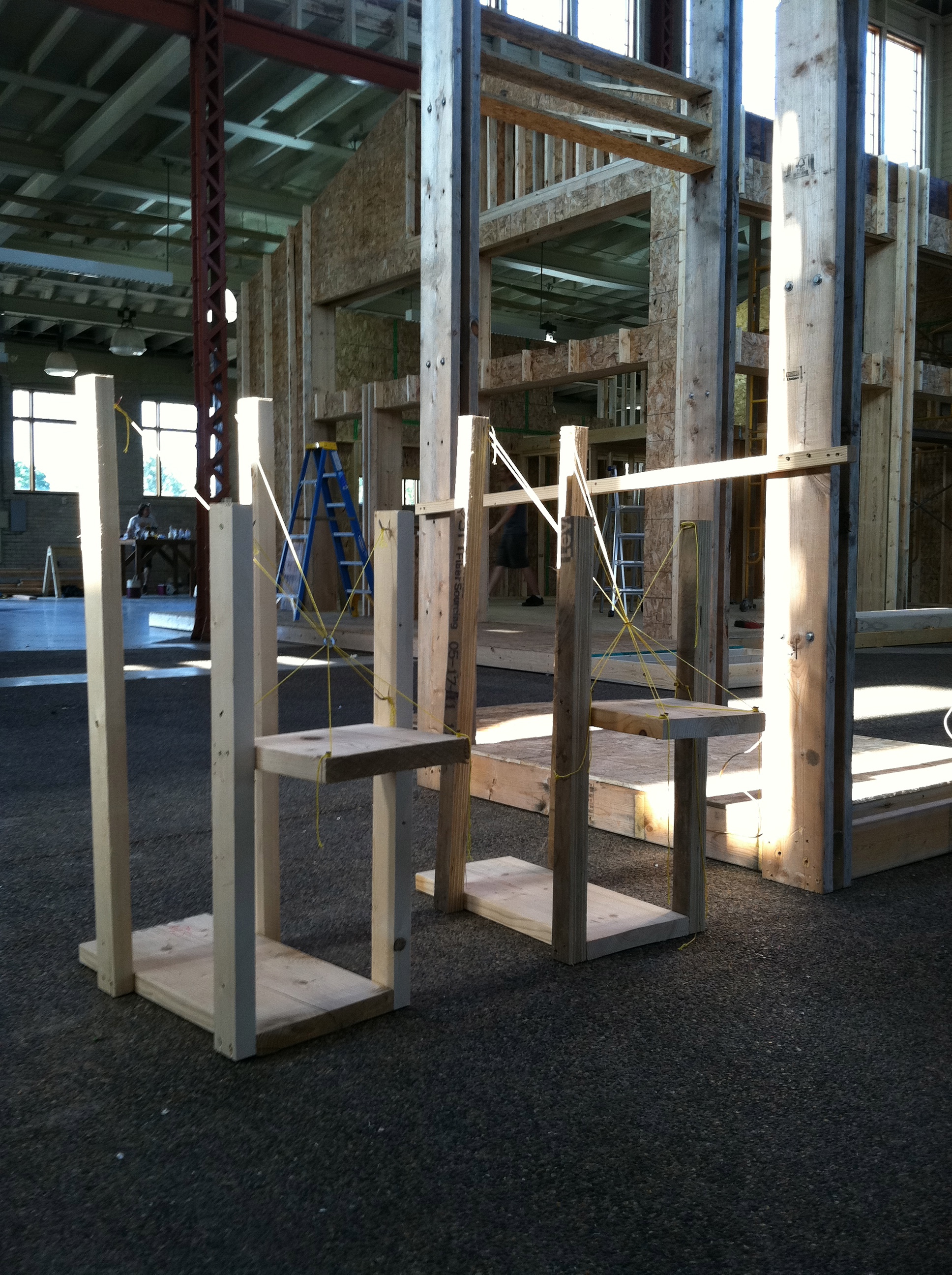
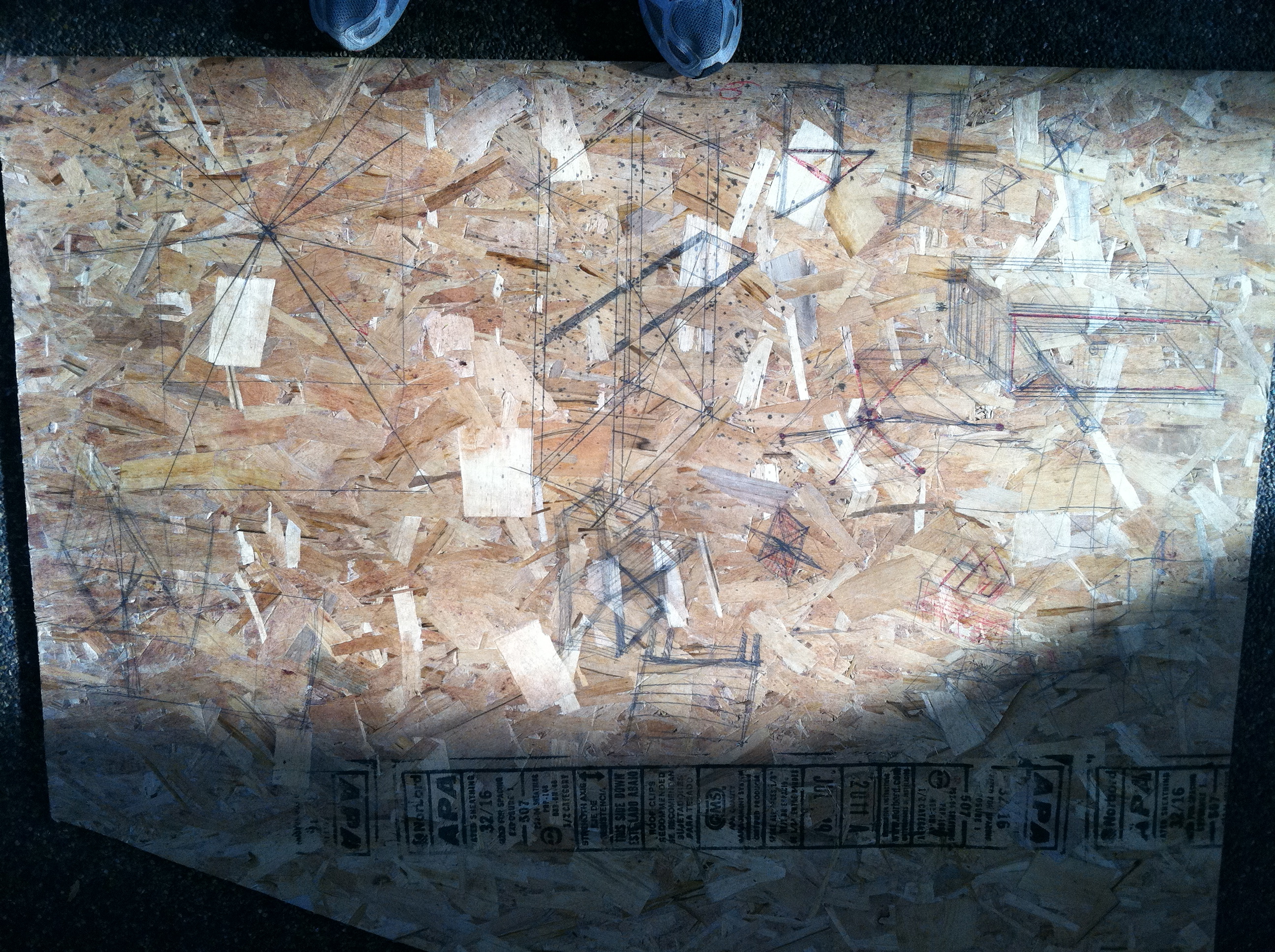
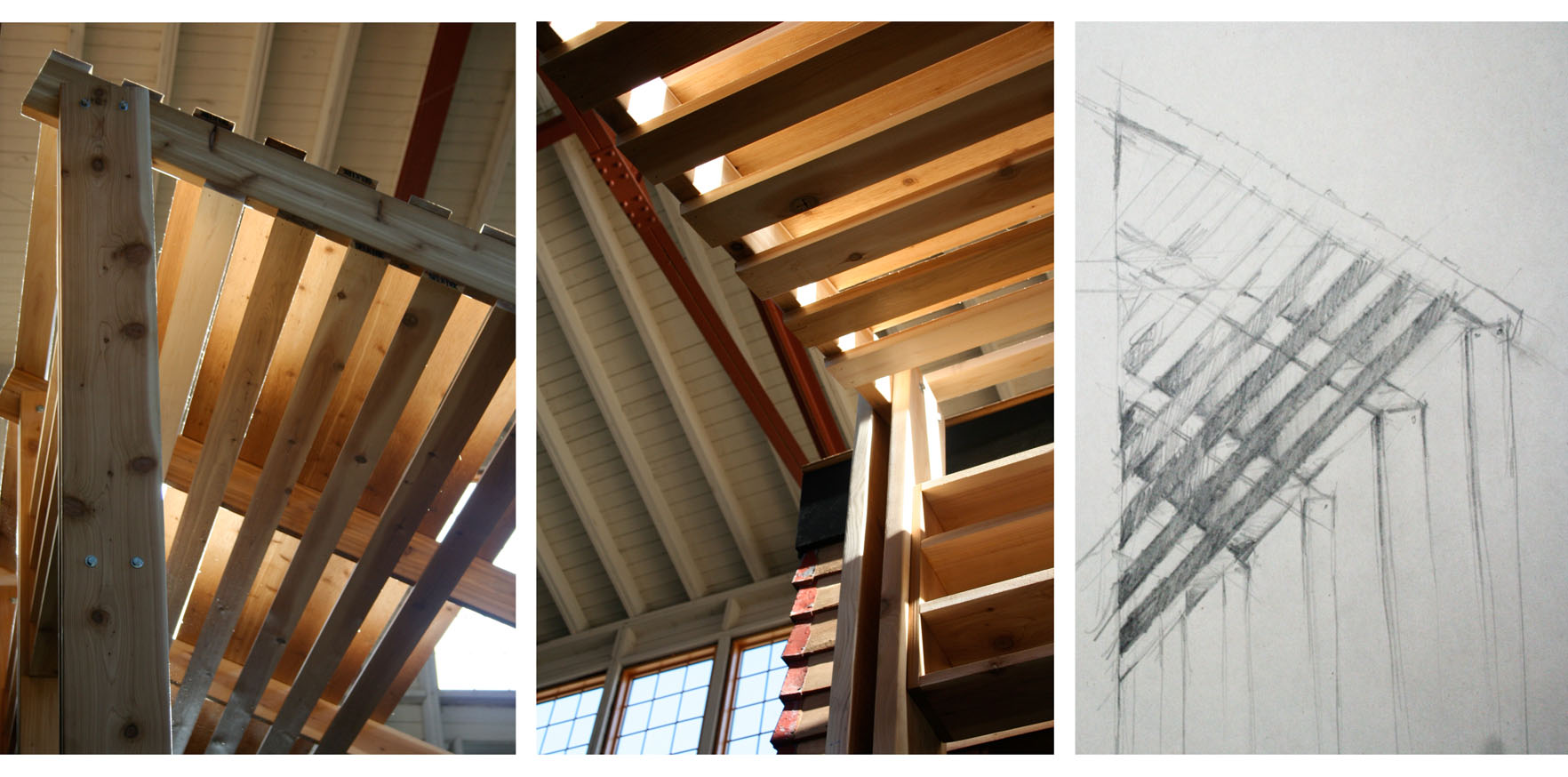
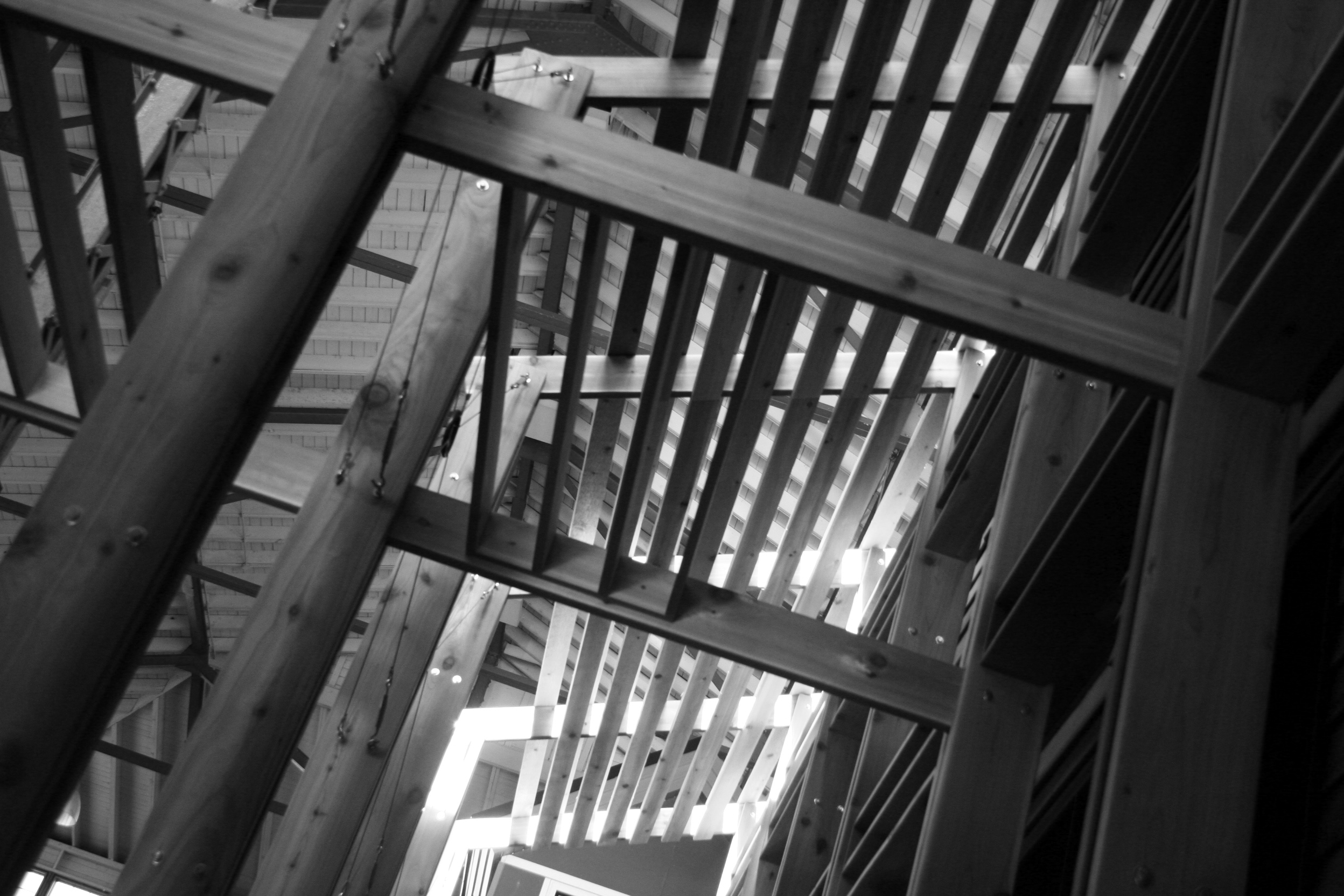
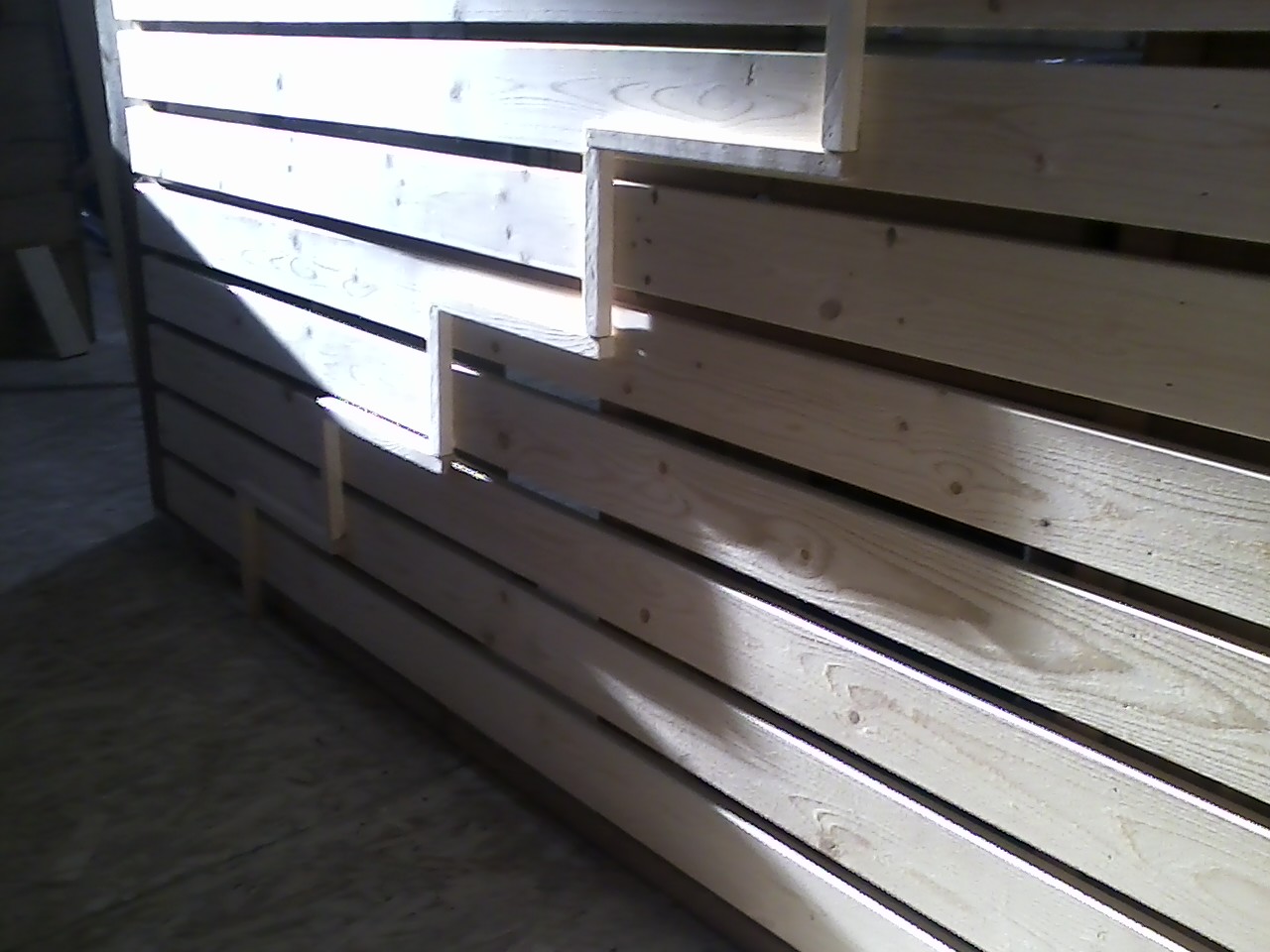
Photos similar to one of the sketches I posted earlier. Interesting things happening with the little light we receive from the windows.. It’s too bad we built this thing indoors.

People.

Quote

Concrete: Complete.

Quote

The following is the process we underwent to make the concrete/glass bench currently installed in the cabin. After a few semi-successful trials, it was time to attempt the full-scale 2’x4’ panels. It was definitely still very much an experiment, but I think we were all very satisfied with the outcome.

Here it is.

1. Collect and crush recycled glass.

I work at an Italian restaurant that does not recycle glass. Instead of tossing away the many wine bottles we go through on a daily basis, I began to collect them. Once we got the okay to explore this as a product in the final design, my collection grew, overpopulating my studio… and the trunk of my car. Time to break them. I first soaked them to remove both the labels and any remaining wine, as the sugar may interfere with the adhesion of the glass to the cement. Then, using just a hammer and a pillowcase, each bottle was crushed until the shards were at a decent size. We later used a small fitted bed sheet over a sheet of scrap plywood which allowed more glass to be broken by multiple people- much more efficient.

2. Experiment.

With small molds, we first experimented with different ratios of glass, cement, concrete, mortar, floor leveler, latex additives, bonding adhesives, etc., etc… Working on a smaller scale allows you to test out the right mixture, without wasting a lot of materials. We found combining glass with just cement, water and a little bit of play sand worked best. When using glass as an aggregate replacement, the gravel and sand in concrete becomes too much.

3. Making the mold.

Carefully measure the desired dimensions. To make our molds, we used scrap pieces of wood lying around the build site. The depth of each panel is 3 inches on the front edge for added strength, 2 inches elsewhere. ½” rebar was cut to size with a hand grinder for reinforcement. Two pieces of ½ ply underneath the thinner area to help with support and to decrease overall weight.

4. The Mix.

The exact amount of each ingredient is hard to say because we used various empty containers around the site as our unit of measurement. Roughly- we used 7 parts glass, 4 parts cement, 2 parts H2O, and a handful of sand. We used a drill attachment for the mixing process. Mixing the concrete wet allows for more working time.

5. Pour.

Fill the mold with the cement/glass mix. Make sure rebar is fully covered and far enough beneath the surface to not interfere with the grinding process. Use a hand trowel to ensure mix is spread evenly. Bull float to smooth surface- we used a 2×4.

6. Vibrate.

Lightly vibrate to consolidate the concrete. We used hammers and lightly tapped the sides. There are more effective and less labor-intensive ways to vibrate the beds, so I would not recommend our method. Do this until air bubbles are no longer on the surface.

7. More Glass.

Next, seed glass on top of the concrete bed and lightly tamp and trowel, avoiding pushing glass too far beneath the surface. This way you can better control the composition of your final surface.

8. Cure Time.

Allow concrete to cure for the appropriate amount of time. We waited 8 days. Cure time varies with size of project.

9. Grinding.

Purchase the necessary equipment. You will need diamond impregnated grinding disks. The grits we used ranged from 50 to 3000, eliminating our need to polish the surface. The disks attach to your stand hand grinder. We had access to some heavy-duty equipment called the StoneMedic, which made shortened the grinding process. It is possible to do it by hand, just make sure your surface is level.

10. Finish.

Depending on the use, there are many different ways to finish the end product. Our bench, we did not finish because the depressions left (from the concrete not being fully consolidated) were not an issue for us. If it were to be a countertop, I would recommend using a concrete sealer if the surface is completely smooth or a heat resistant epoxy/resin to fill in the imperfections and help with sanitation issues.

11. Installation.

DONE! Provide appropriate support and install.

-Pictures on their way…
A sudden loss of momentum

Quote

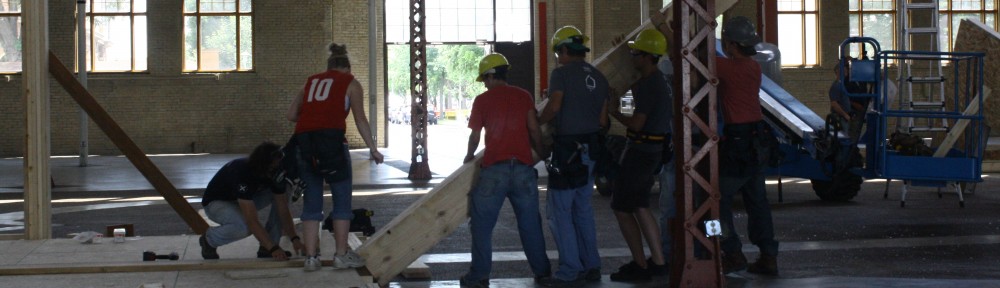
As the second day of framing came to a close we felt confident in our rapid progress. Cleaning up I managed to hit my head on a metal bracket attached to the outside of the progress center. Brittany helped clean the wound and we got ready to return the u haul truck, mikey drove the truck Andrew navigated and I trailed them in mikes pickup which he had mentioned was not running very well. Just a few miles from the u haul place the pickup winced shifted rapidly up and down but never found gear. Mike and Andrew continued on not noticing their ride home was limping to the nerest exit. I called mike then found the nearest auto part store to borrow a trouble code reader. After deleting the trouble codes and adjusting some intake hose clamps I set off again the truck capable of doing twenty miles an hour. Stopping to get gas quickly I would have forgot to pay If I hadn’t stopped to ask the attendant for directions. From there it took the pickup an hour to limp to the rental place I arrived hot discouraged and still bleeding slightly. We called Johnny to come get us. Meanwhile the rental place closed and we were sent to the side of the road. We couldnt help but be slightly amused with how fast the day turned into a struggle but were grateful that it had happened in a way that did not affect the build.

Thingamajig

Quote

Here is an image from just over a week ago. Chris Nelson and I needed to have a method of cutting a 22 degree angle into 8 ft long 1″x4″s with a chop saw in a manner that was consistent and could be repeated about 12 times. We through together this guide to help us make the cuts. The guide helped us to hold the 8ft long piece of wood perpendicular to the the blade, enabling us to cut the 22 degree angle into the wood with much greater accuracy.

26 >> 8/25/11

Today was the opening day for the fair. I was worried about getting there on time, but Melissa and I used the park-n-ride service which was pretty painless. I think the exhibit was well-received by most of the visitors. Some weren’t interested or simply weren’t buying it, but many people seemed genuinely intrigued by what we had to say.

Pam, our media contact, and a crew from the NBC station stopped by in the morning. They asked me for a little 30sec sound bite which they ran on the evening newscast. Check out minute 7 – hopefully the link stays active for a while… KARE 6pm Newscast 8/25/11
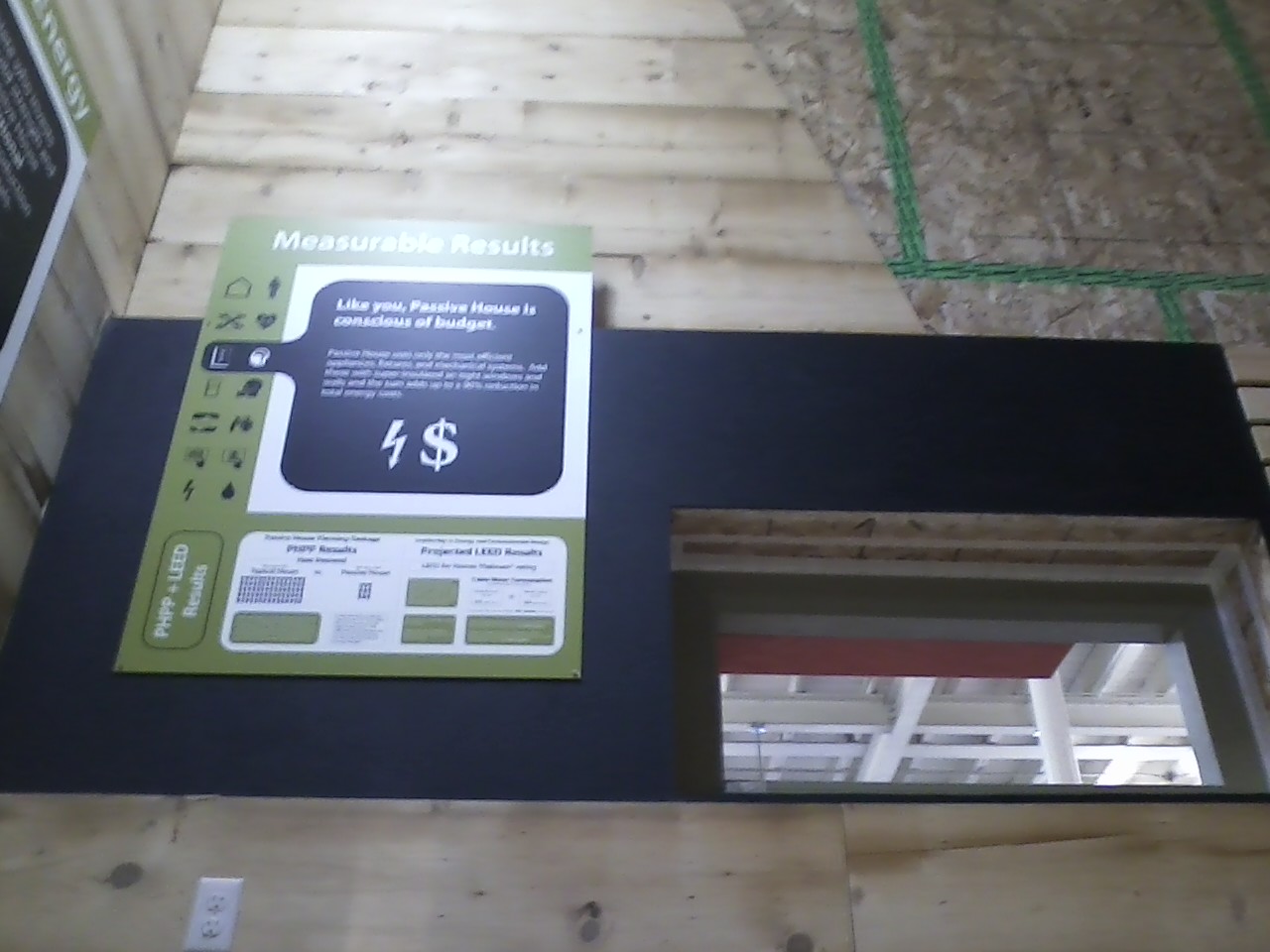
Brittany and I presented on the Sustainability Stage in the evening. It’s hard to gauge exactly how interested people were – I suspect many of them were content with just resting their legs for a while. But if someone has an idea as a result, then I guess it was worth it. One audience member, an architect with Vincent James, seemed rather interested and visited with us for a while after the presentation. A few others stopped by to get a closer look at our concrete samples.

25 >> 8/24/11

We weren’t expecting to do a great deal at the fairgrounds today. But like Monday, little odd jobs seemed to keep popping up. I spent some time with Nic and Dusty dressing up our solid-wood wall mock-up. I also cut and taped process photos to the shelving with Peter.

We did all meet as a group and review our concepts for a short time. I expected the meeting would be longer, but time was short. Brittany and I seized the opportunity to test our presentation slides. It’s a good thing since we found that the screen has a 16:9 format (I had assumed there would be a projector with a 4:3 format). It’s no big deal but it will require some resizing of our slides. I’ll try and finish the slide show tonight so we can rehearse the presentation a bit after our shifts tomorrow. I think we’re both worried since there really hasn’t been enough time to prepare a proper presentation, but I guess we’ll just have to roll with it…

24 >> 8/22/11

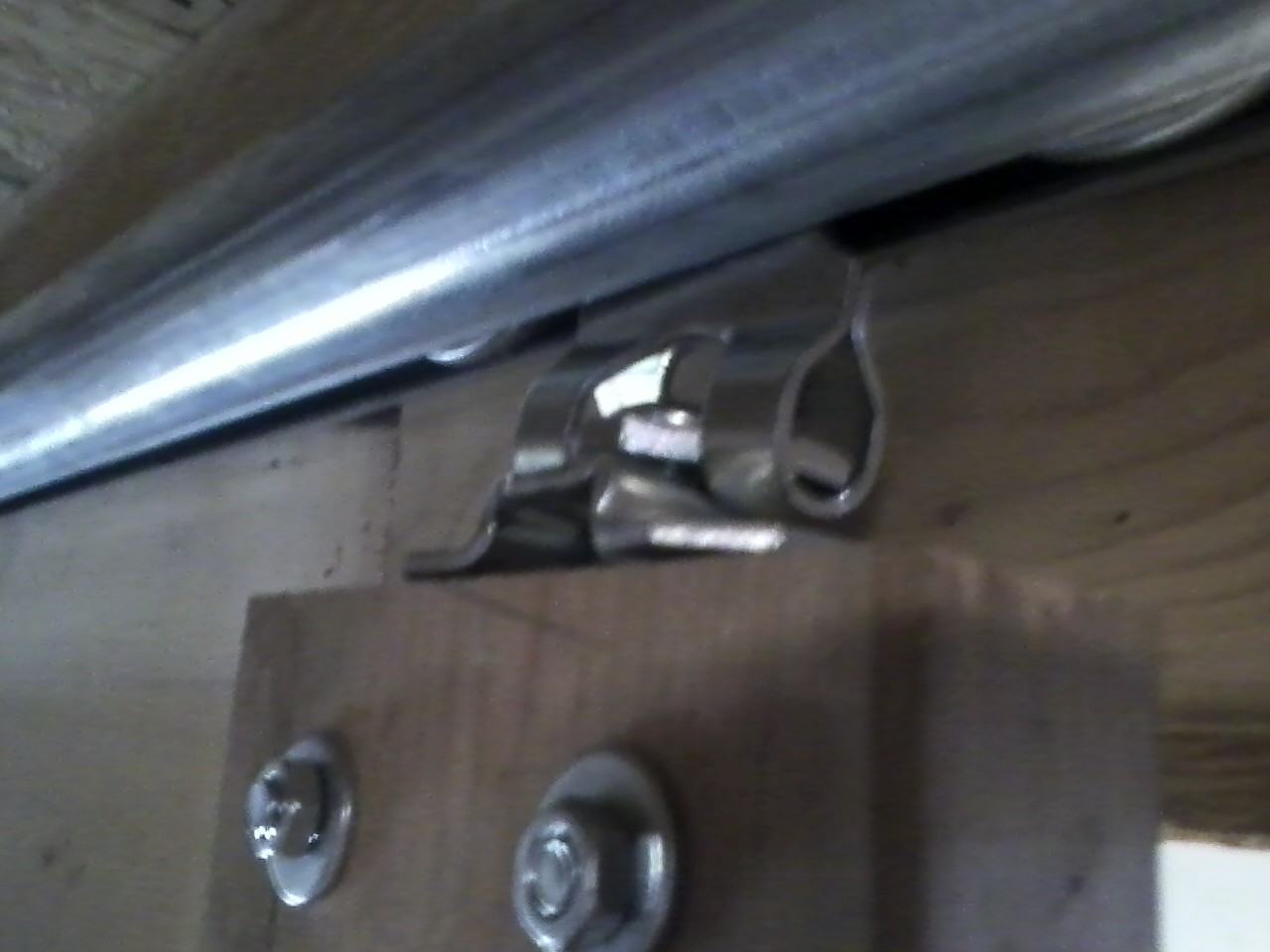
Today was supposed to be so simple – just mop up the last few things – but it turned into one of our very longest days. Right away in the morning, Paul, Ty, and I installed the track and trolleys for the bathroom door. They Ty and I spent some time building a small, intermediate step between the shading structure and the pavers. It really turned out nicely with everything sitting flush with everything else. Unfortunately, it’s also hard to see so Nick will be adding an aluminum angle to make it more visible.

The biggest job of the day, however, was an unexpected one. Somehow we became responsible for building two ramps between the pavers and the concrete floor. Ty and I ripped a bunch of lumber down to the proper size and then built a jig to make the angled cut. Half the boards needed some additional trimming but we managed to get them looking uniform. Then we had to cut some blocking before finally adding the OSB.

The whole process was pretty involved and not very pleasant – not the ideal way to end work on the project. But now the cabin is essentially complete and looking awesome; it feels great to have been a part of it!


23 >> 8/20/11

After working on gabions day after day, it was nice to tackle some other projects. Paul and I put the cedar bench together on the south side right away. It was really easy work since Paul had already cut and adjusted the pieces yesterday. We just glued the pieces together and fastened them.

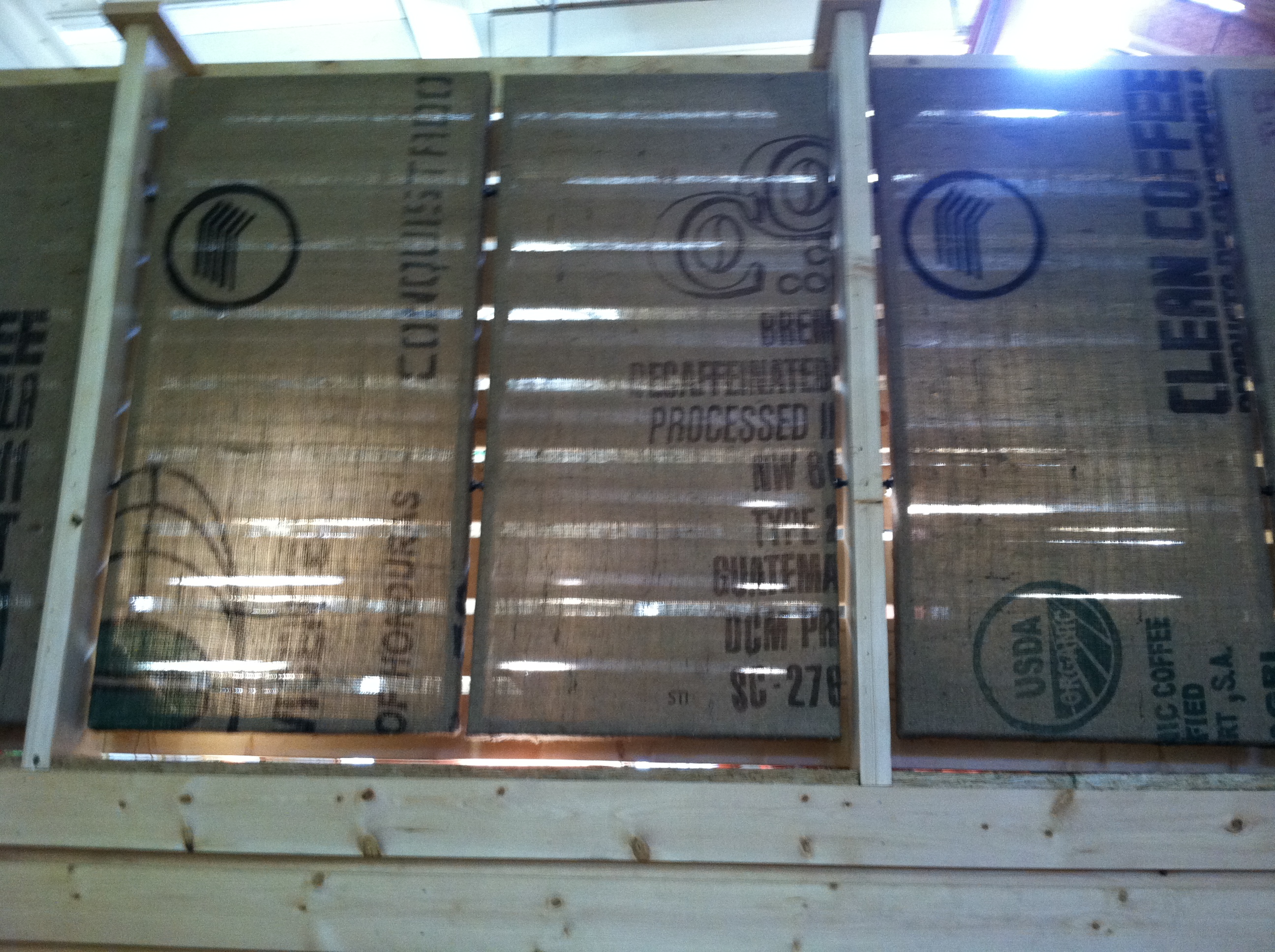
The rest of the morning and afternoon I worked with Chris. We took little pieces of 1×1 which had cut to size and outlined the profile of the stairs. After lunch we made the final adjustments to the loft railing. We took the remaining slats off the front, cut them, and placed them on the backside to better display the floating burlap panels. We also added caps to the railing posts. It’s a simple gesture, but it mimics the language of the shelving nicely.

Ty and I were asked to trim the inside of the door which was the very last thing to be trimmed. The joint where the door’s rough opening meets the little electrical shelf is pretty odd, but I think we handled it as well as we could have. We also discovered an inexplicable wave in the siding which necessitated some re-cutting. Believe it or not, it was my first time truly working with richlite on the project. It’s a really remarkable material though not forgiving at all; I can now empathize with my classmates who have been using it for over a week.

22 >> 8/19/11

The project is really winding down now. We had another great day of work from everyone; the whole cabin is starting to look really nice. Luke and I even got a little break from the gabions. Instead, we started by building a toe kick for the south side. We attached a piece of richlite to some otherwise unusable redwood and then nailed it down. Then Luke began adding rock between it and the windows while Mikey worked on trim. The richlite is pretty subtle, but should be enough to prevent any unintentional kicking of rock.

The rest of the day, Luke and I worked on finishing the gabions once and for all. He attached the cages to the north wall while I manufactured a new angled gabion. (The original was banged up on Tuesday, but we were able to salvage it and move it to the east side.) We didn’t have any more material, so I salvaged one of the badly damaged gabions. I cut it apart entirely and straightened the mesh as much as possible. After adding new edges to the metal, I began stitching the pieces back together which took most of the afternoon.

We finished attaching and filling all the gabions by the end of the day. They look very clean – much better than the first attempt.We also took advantage of the work being done on the north side window by realigning of the weather membrane to match the edge of the wainscoting. If you step back, it looks as if the gabions have been cut and peeled back along with the rest of the wall.

The Second Law of Thermodynamics

Quote

As the building of our passive house came to a close last week, the mess created by our seemingly innumerable small projects kept on building up. From trying to find 1 1/2″ screws to rummaging for the right size of 1″x4″ scrap, the process of finding the tools and materials to get a job done kept eating up more and more of my time. At its worst, I spent almost one hour looking for the correct bit to put in eight small screws. It appeared that the natural laws of entropy were in full effect at the build site, especially when fourteen people were frantically trying to complete a housing project.

Catalogue of Cellular Telephone’s Captured Instances-Part II

Quote

Slide.

I really enjoyed this picture of the “stairway” because it’s as if the setting sun is giving the representational stair the depth that it could achieve if it were actualized.    

Echoes of the Stairs

-Nic!

Journey of John

Quote

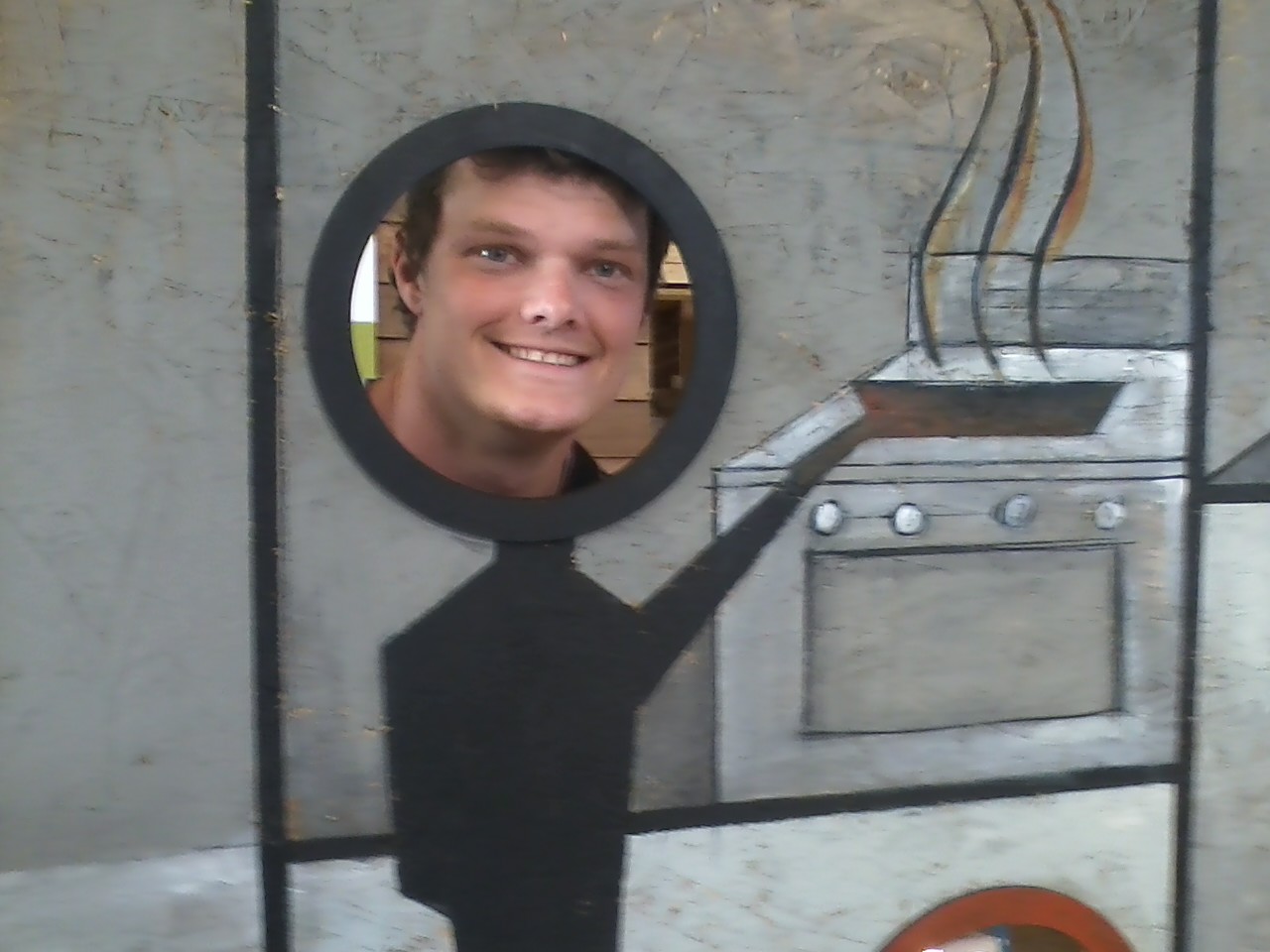
John Cooking...No Big Deal

Monday the 22nd proved to be quite a hustle bustle type of day for everyone. But no matter how busy we get we can’t help but notice the doings of our peers. Today I noticed John everywhere: Working on his heliodon, placing displays or even documenting out build. John, this one’s to you.

John in the Kitchen