Deconstruction – Day 4
Image
Peter Atwood and Nick Lippert Presentation
Image
September 7.
Quote
Not a lot to say about this day. Today was spent collecting the cellulose that was sprayed in the wall cavity around the east door. This was to show the section through our walls to communicate the amount of insulation used. Great idea- a mess to clean up. After a few trials, the discovery was made that the shop-vac was going to be the cleanest alternative. Dusty and I worked finished after innumerable empties of the vacuum- which equated to about 5 large garbage bags filled with compressed cellulose. Tied them up and called it a day.
September 6.
Quote
Today was day one of the deconstruction. Driving into an empty fairground this morning was more relieving than I can explain. We began the day by discussing the order in which things would be dismantled/numbered/packaged/etc. Chris and I started with the slats in the loft… I do not remember putting that many finish nails into this thing! They were everywhere. The process was pretty painless and we had them packaged quite quickly. Next came the burlap panels and then the posts. Before we knew it, it was 3 o’clock and time to shift into thesis mode. With our RFPs due in a couple of days, we all left early to focus on the assignments happening back on campus.
September 4.
Quote
LAST SHIFT! This evening was my last time on duty at the fair. Labor Day weekend brought more people than I had imagined. Though the day was quite hectic, the house emptied early giving Ty the opportunity to coerce Mike and I into riding the Skyscraper after close. I had resisted the temptation on my walks to and from Eco, so being it was the last shift- I had to. We had all had our share of the fair- but seeing the midway lights upside-down 150′ (if I remember right) in the air was a great way to end the night with a quick thrill.
Before ending this portion of the build, I figured I could reflect a bit on the experiences had over the past week and a half…
There were some interesting encounters over the extent of the fair. To name a few- the guy who compared our design to one of his recent nightmares (thanks!), the somewhat paranoid individuals concerned with the amount of glass and lack of privacy or the impressive thickness of our door that would be the perfect addition to a concrete house (or bunker), the couple who had recognized our program from a conversation they had on a flight with students (us!) on their way to SanFran last fall, the large amount of renovation/retrofit questions thrown our way- not always pertaining to the ideas used in Passive House but still fascinating all the same, the people interested in our schematic design process and how we arrived at the decisions we did (I liked those questions), and the countless questions about… the rocks.
All in all, it was a great experience. So many people, so much food. I think NDSU and everyone that has been supporting us through this whole process might really benefit from the exposure at the fair. There seemed to be a lot of genuine interest and I’m excited to see what comes off it.
43 >> 9/11/11
Mike and I picked up right where we left off by driving to Renaissance together. When we got there, we found that someone had left a trailer in the loading dock. We worked around it, but it definitely made things more difficult. We started with the truck on the far side of the parking lot but soon moved it closer to the door. To get the corner detail out, we moved the truck a second time to just outside the lobby.
Luckily we had good help. We enlisted Luke Schneider and Mike’s friend Bobby. Jim Clapper even came in on a Sunday to lend a hand. Aside from the loading dock fiasco, everything was unloaded just fine. The wall sections were in the lobby for a bit, but we later moved them up to the fourth floor. We also returned the equipment and scrap material to the woodshop.
42 >> 9/10/11
The big project for the morning was to take apart the floor diaphragm. With everyone working on it, it was done before break. The rest of the morning was spent cleaning and organizing what was left. For instance, I used the magnet to pick up all the screws and nails from the floor. I also emptied out all the tool belts for inventory.
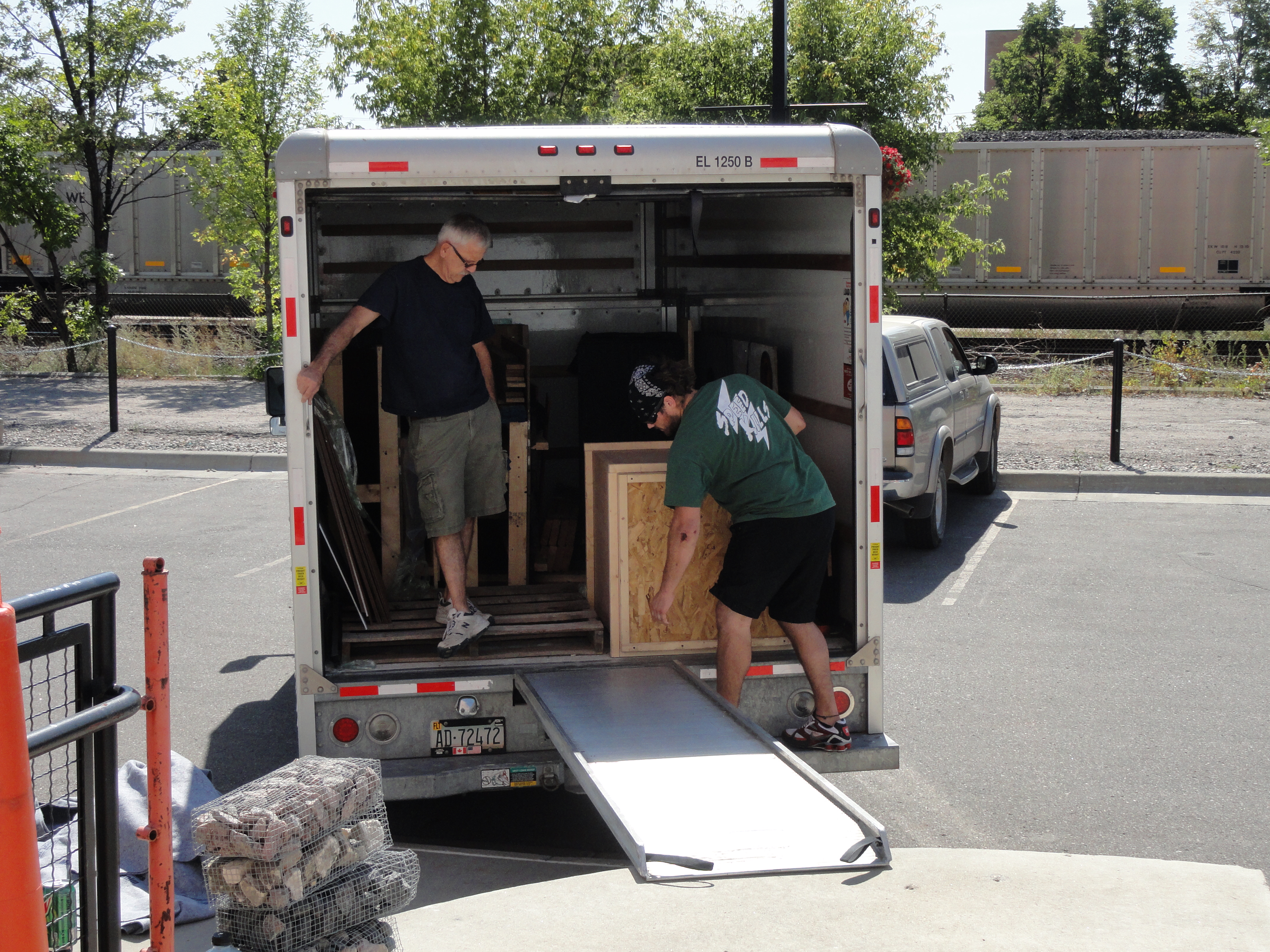
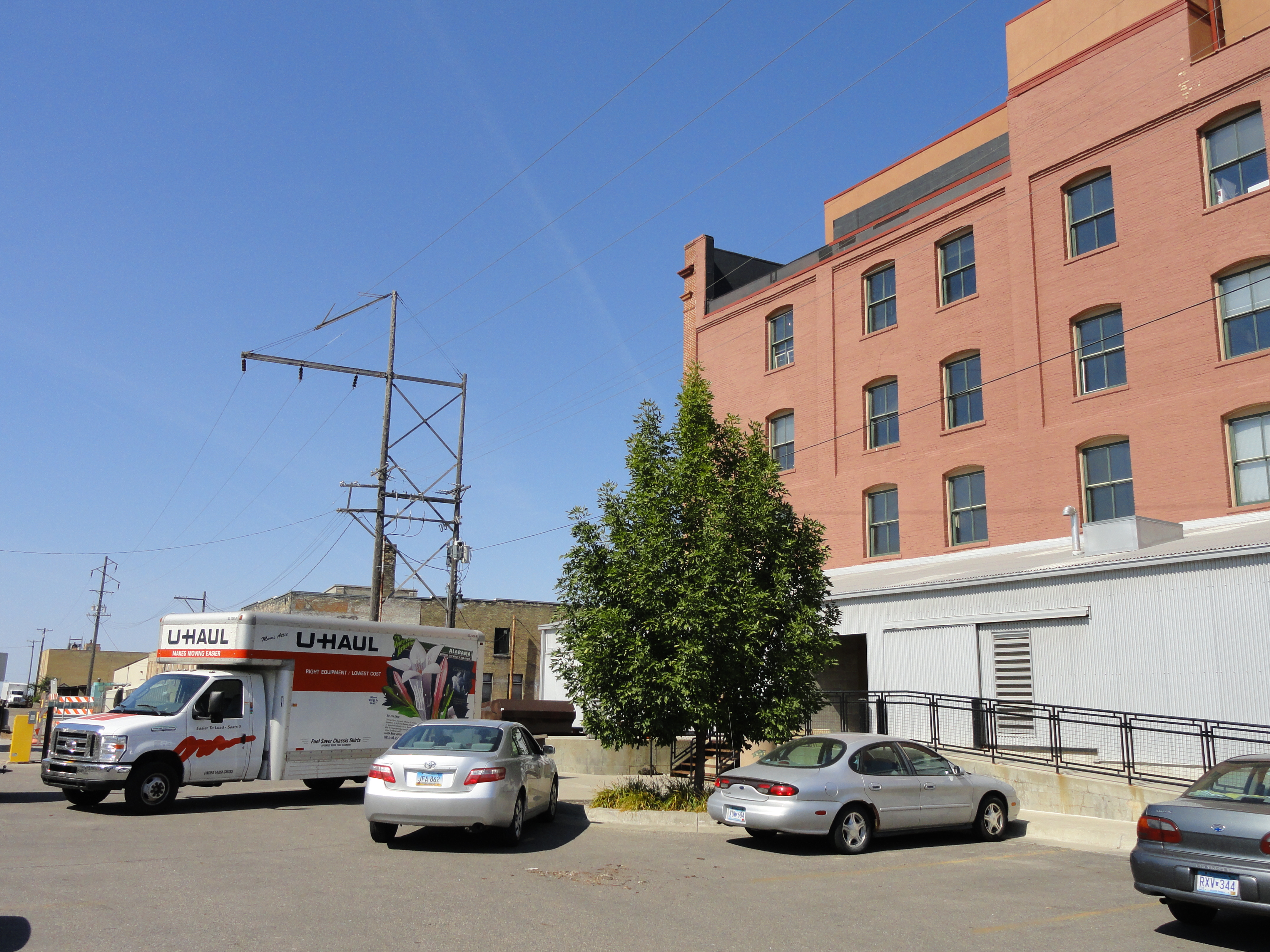
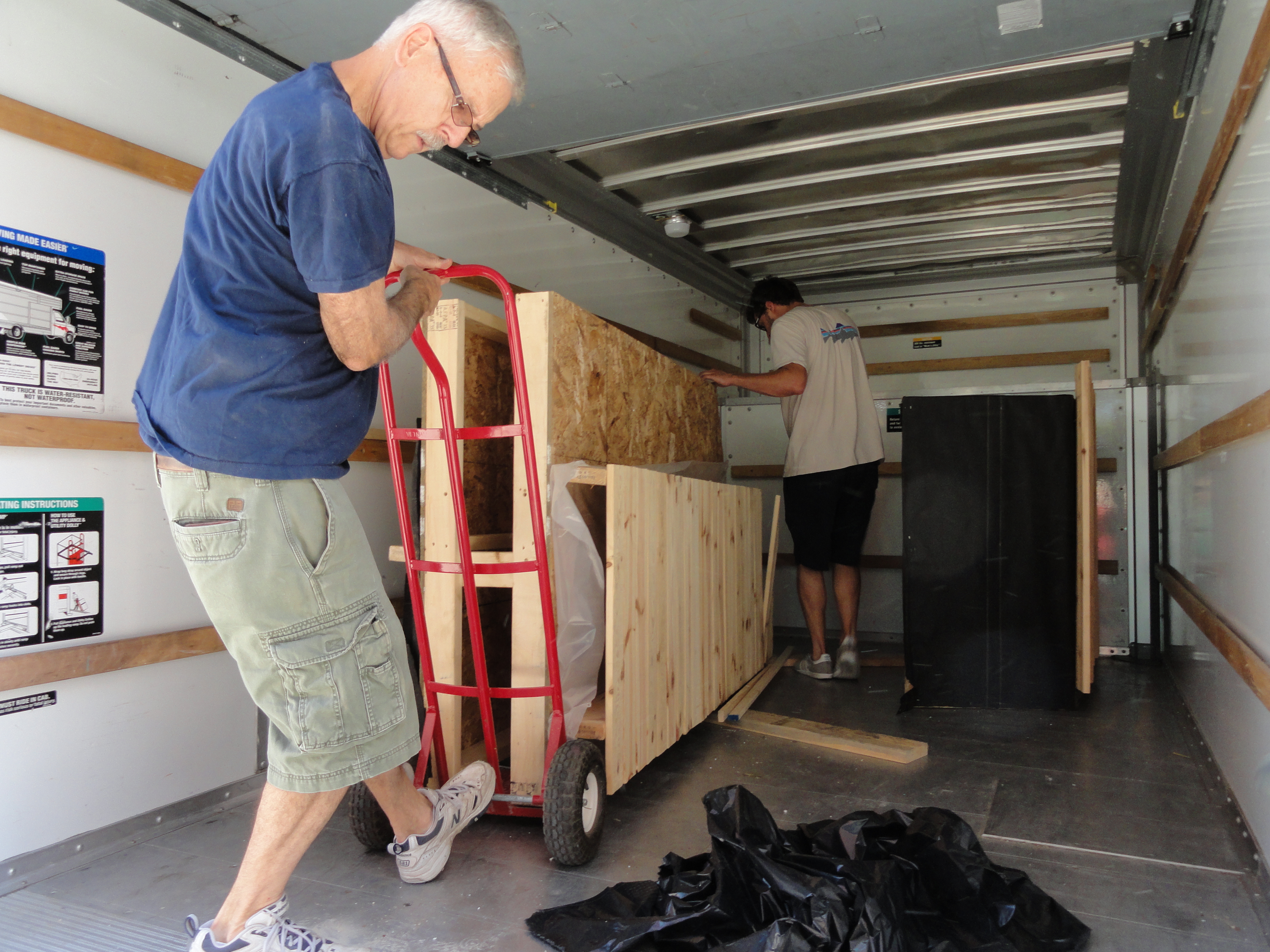
After lunch, Peter and Mike returned with the UHaul which we loaded with the things going back to Fargo. With everything wrapping up, we discussed how to get the UHaul to Fargo in time and load the rest of the stuff for Kjell. We talked about it for a while and heard opinions until it was decided to split into two groups. One would stay in Minneapolis and load Kjell’s things on Monday while the other would return to Fargo and unload the UHaul.
Mike and I got underway shortly after that. Peter gave me one of the time-lapse cameras and a crash course on using it since I’d be documenting the drive back and unloading. We stopped by Christine’s to say goodbye and pick up my stuff before doing the same at Paul’s parents’ place in Minnetonka.
Then we hit the road. Myself and the time-lapse followed Mike in the UHaul the whole way back. Mike kept the pace brisk – I think he enjoyed driving a truck that didn’t top out at 65. We got back to Fargo a little before 10pm and parked the truck. We’ll unload it at Renaissance in the morning.
41 >> 9/9/11
We got an amazing amount of work done today. Nic, Dusty, and I started by taking down the loft. It came apart in three sections which we moved elsewhere. We removed the remaining columns and finally the dummy walls. That allowed us to get to the interior sheathing which came down without too much fuss.
After lunch, Nic and I used a scissor lift to take down the gables on the west side. Mike finished that work as we were reassigned to the south wall. The two of us plus Chris and Nick started by taking down the enormous header piece we had jacked together weeks ago. Then we turned to the cripples which turned into quite a job. They had been nailed in place (some with eight or more nails) so removal was tough. Luckily Nic is an animal with a pry bar – he unleashed all sorts of hell and made short work of it.
It took Brittany, Luke and I a few hours to build the top part of the southwest column; I took it apart in about five minutes. By that time, others had removed all the sheathing and the window headers on the south and west sides. We then began unfastening the columns and setting them aside.
It was getting late, but we decided to keep working and take it down to the floor. Lyle had already cross-braced the four remaining wall sections so we started unscrewing it. It went really well despite a few screwheads breaking or being hidden under cripples. The former issue resulted in Nic actually busting a sill plate with his pry bar; a ‘slow clap’ followed.
The forklift was a lifesaver since our goal was to keep the walls in big pieces. The biggest piece was also the last; we took out the north wall in its entirety. We temporarily attached 2×12 extensions which we set on top of two scissor lifts. Johnny and Nick were able to lift and drive the wall outside where it was passed to the forklift and set behind the building.
It was dark when we finished, but there was only the floor remaining. A few of us went out for food afterwards to celebrate.
40 >> 9/8/11
I rejoined the team for tear-down this morning. I was simultaneously pleased and horrified with the progress they made. They had disassembled quite a bit already – a good thing, to be sure – but the lovely building that had been standing there when I left was literally in pieces. Most of the finish materials were bundled and stacked as was the shelving.
Chris, Nic, and I started by removing the floor sheathing from the loft. Then I started taking the gabions apart on the east and north side with Brittany and Melissa. With them out of the way, we could remove the furring strips and foam blocks. Others removed the cedar columns and took apart the ‘patio’ on the south and west sides. The roof sheathing and joists were also removed.
After lunch, Nick and I emptied all the rock from gabions. Then we began taking down the fascia and exterior sheathing in order to reach the main beam. We did that on both sides and attached some 2x4s so that the scissor lifts could be used to remove it. While the front fascia was being removed, I bundled and labeled the siding that Chris and Johnny took off the south side.
A number of us helped uninstall the windows and repack them in their shipping crate. The last thing to do was take down the main beam. I was able to watch it from below and, I gotta say, it was quite a sight! Two scissor lifts hoisted the beam out of its pocket using the 2×4 extenders and passed it to a third lift. That lift shuffled over and passed the beam to a forklift which moved it over and around the crate of windows. Safe and sound!
37 >> 9/5/11
Today was the last day of the Fair. It was a long day, but fortunately not as busy as Sunday. Just before the exhibit closed, Mike and I savored the shading structure one last time – it’ll be a shame to see her go…
With the Fair over, I’d have to call the demonstration house a success. Those who bothered to read the boards or talk to a student left pleasantly surprised (or so it seemed to me). A lot of eyes lit up when we told them the cabin was designed a built by students. Others were impressed by the reduction in energy usage.
In all of those conversations – hours and hours’ worth – a few questions came up again and again. Naturally, that starts to where on a person. We managed to stay polite outwardly, I think, though our thoughts may not have been. Here are some of the questions I was most frequently and what I was thinking as I answered…
‘How much does that window cost?’ I honestly don’t know; yes, they’re expensive, but windows always are. I am not a salesman and this is not a product showcase. I’d rather talk about their role in the building’s thermal envelope. Windows are just sexier, I guess.
‘What’s with the rocks?’ They’re for shedding water. They’re called gabions, g-a-b-i-o-n. No, they’re not loadbearing; it’s a cladding. No, they’re not loadbearing, either. Please don’t kick them.
‘Is that how the walls are gonna look?’ Yes, this is the final finish; we will not be plastering. The slats are another of our cheap and easy solutions. They do help with air circulation, but they’re more a product of the clients’ request to be ‘rustic’. No, it’s not very private, but it’s a loft.
‘Are you with the U?’ Nope. North Dakota State, actually. But kudos to the U for their support.
‘How thick are the walls?’ About sixteen inches. It’s a lot, but it’s necessary to super-insulate the walls and windows to reduce our energy use. The 2×6 assembly defined in the building code is the minimum, but there are other ways to build a wall.
‘So you have a bunch of solar panels?’ No. Photovoltaics and passive solar are completely different things. PV may be a good option if you’re tired of big electricity bills (geothermal, too). But the point of this demo is to show just how little energy is required by a passive house. Unless you’re absolutely intent on a net-zero project, you’re better off investing in a passive design.
‘What’s the per square foot here?’ If I tell you, you’ll stop listening. Per square foot is not always a good way of comparing prices. Our design had an estimated cost that was very high per square foot, but it was complicated by a number of factors including small scale, donated labor, student labor, and DIY projects. Instead of talking about that, though, I’ll quote the 15% figure from PHIUS and direct your attention to the materials in the wall assembly.
Last piece
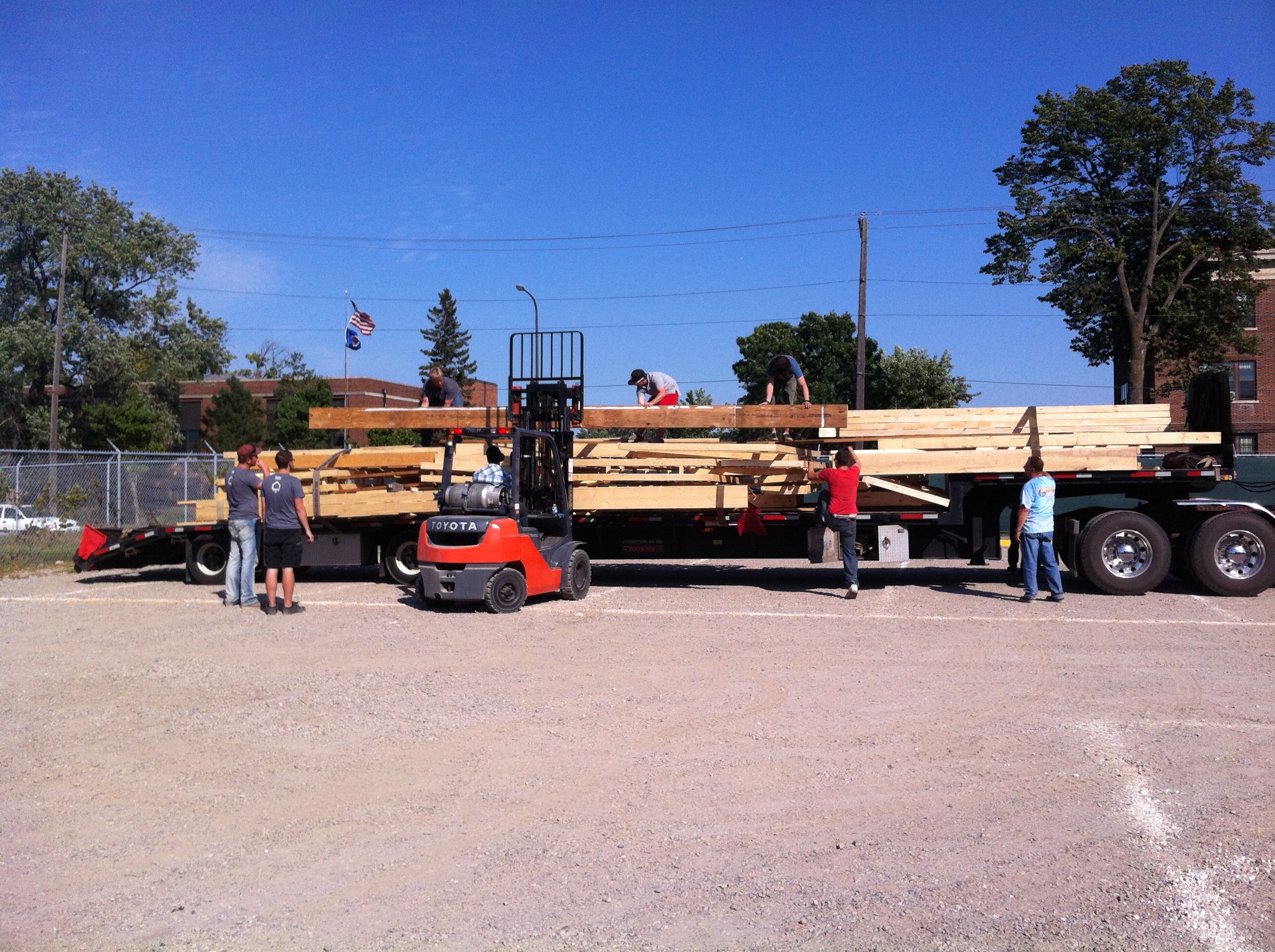
From here to there
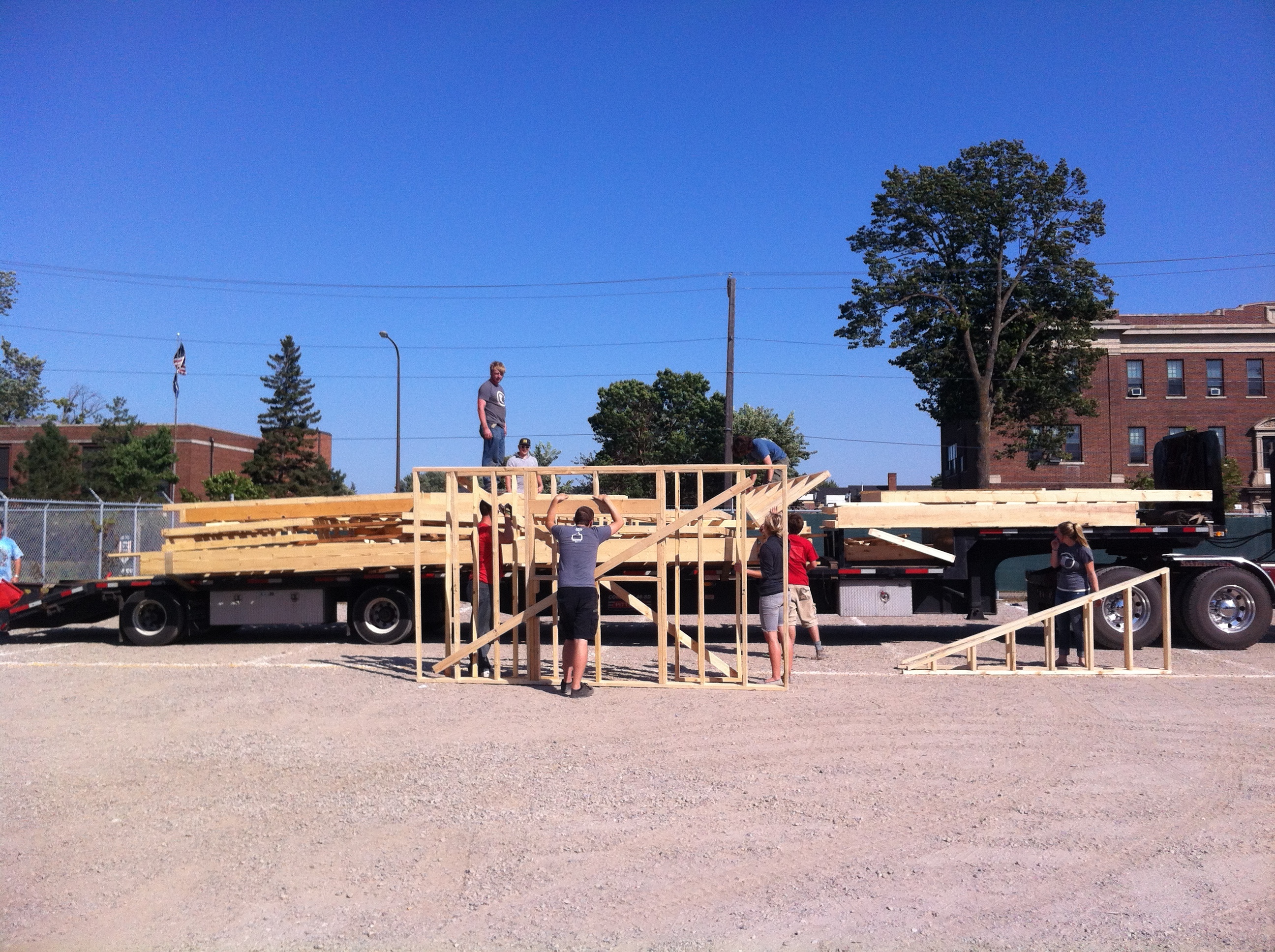
Two walls at a time
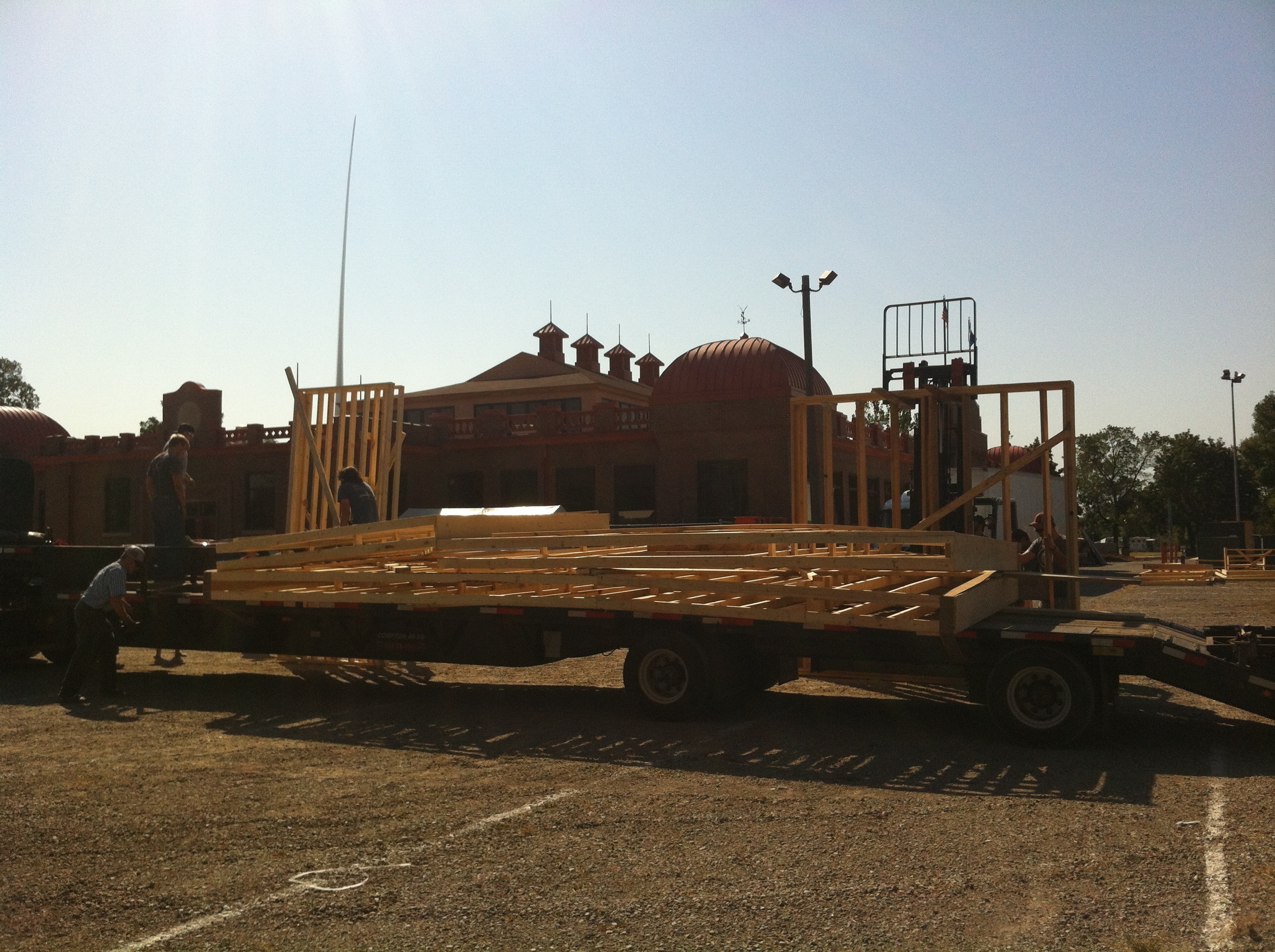
Next wall ready
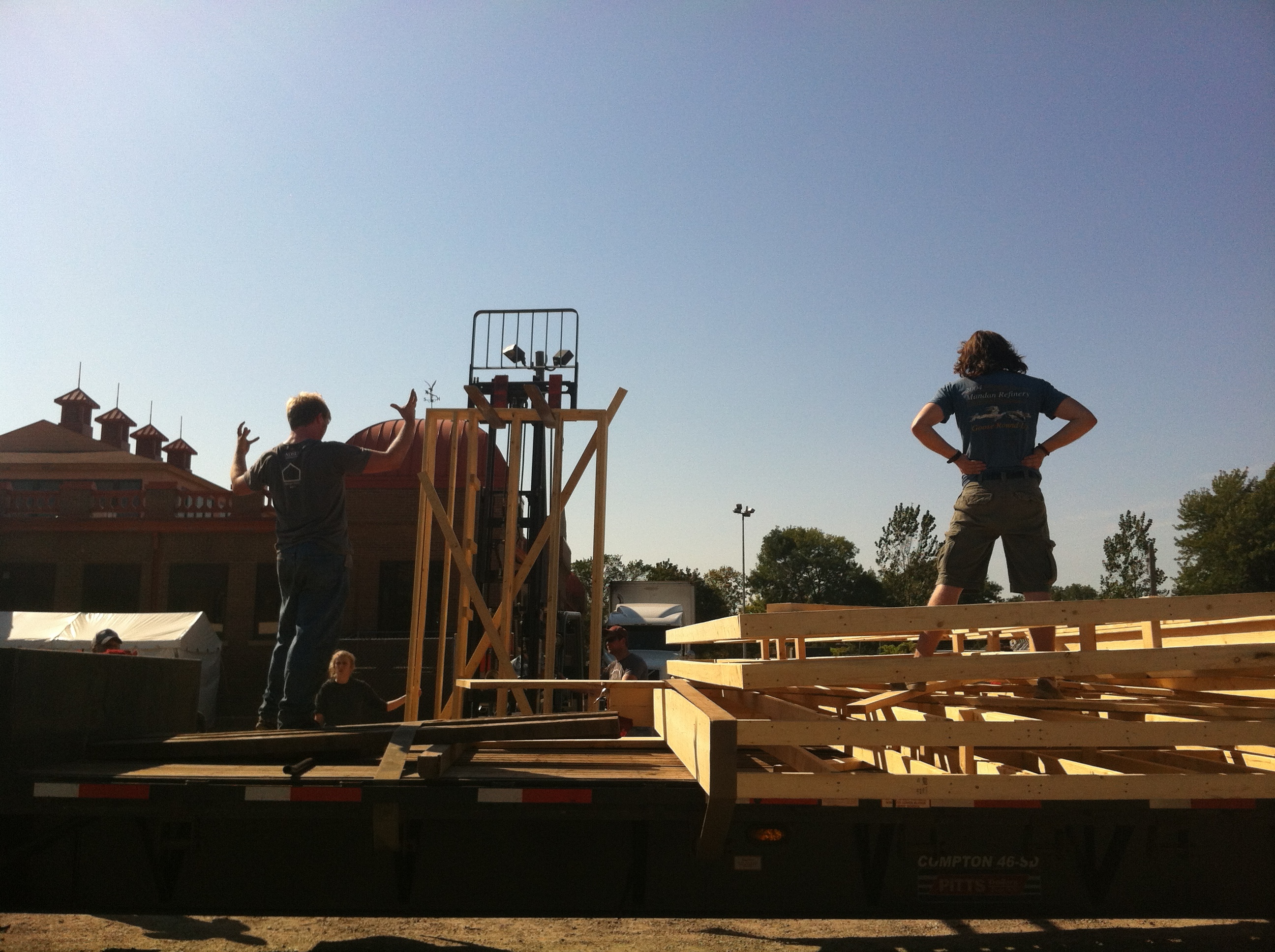
Two more walls on the bed
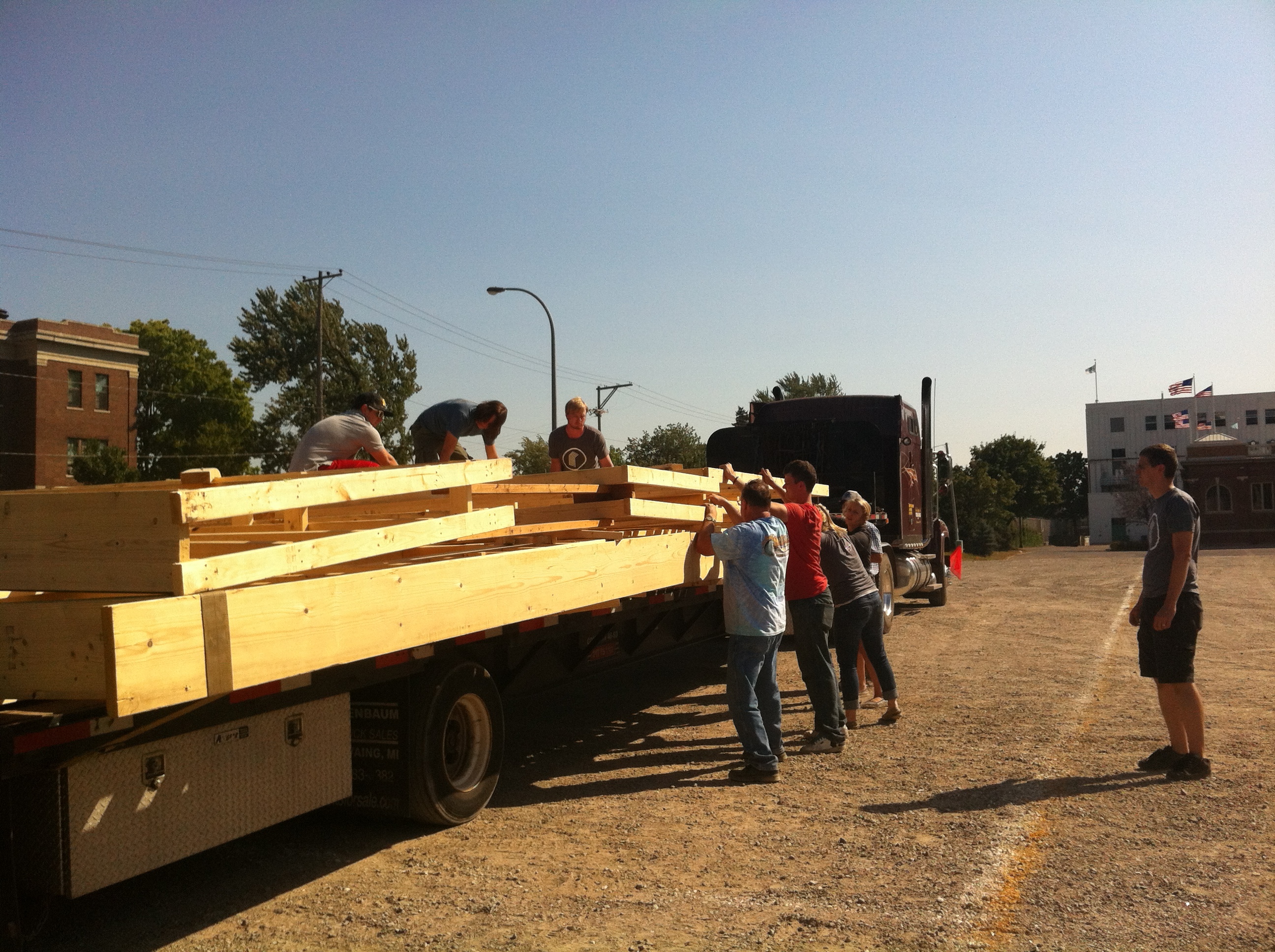
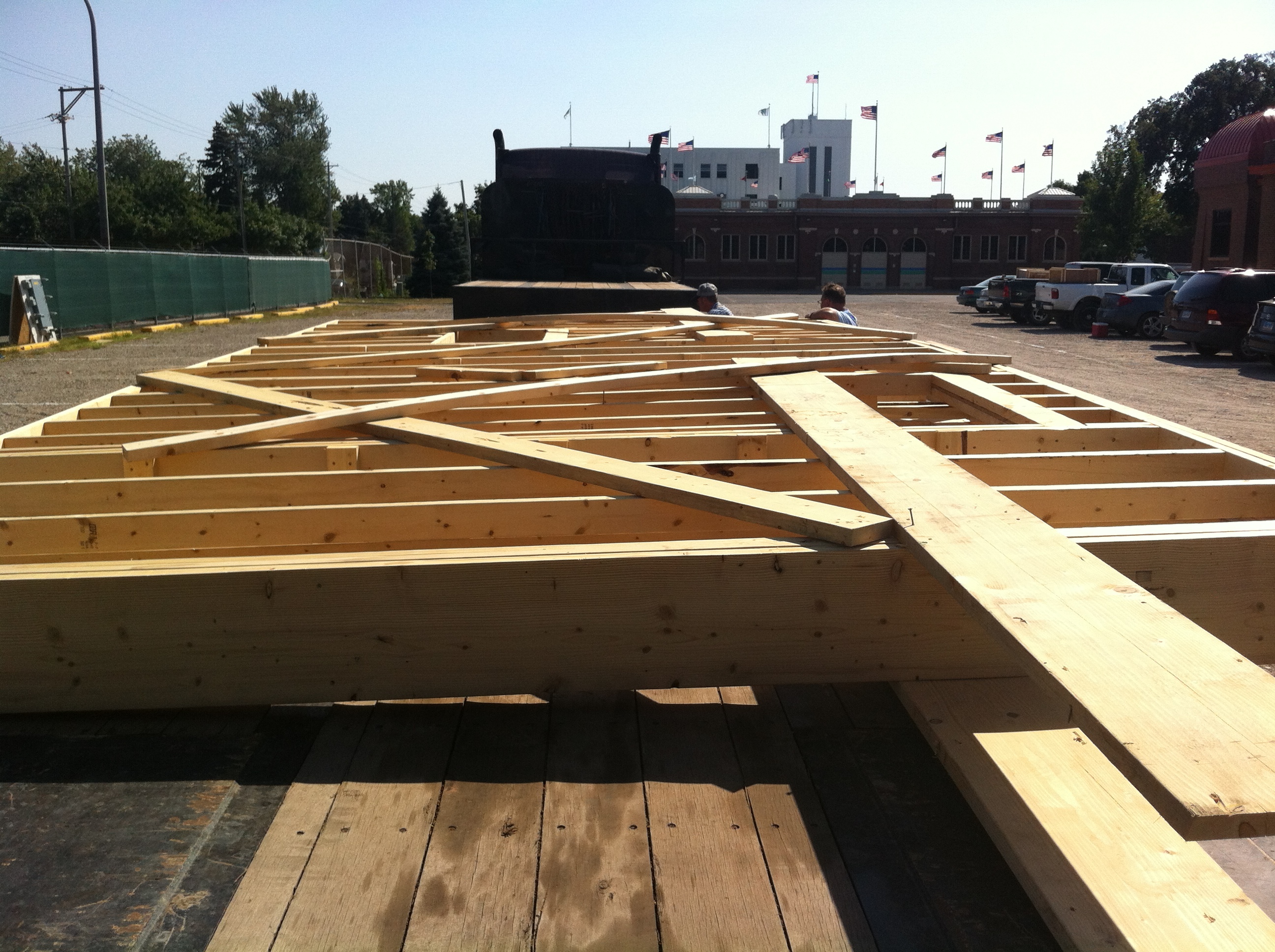
Loaded north wall on flat bed
And more time lapse fun
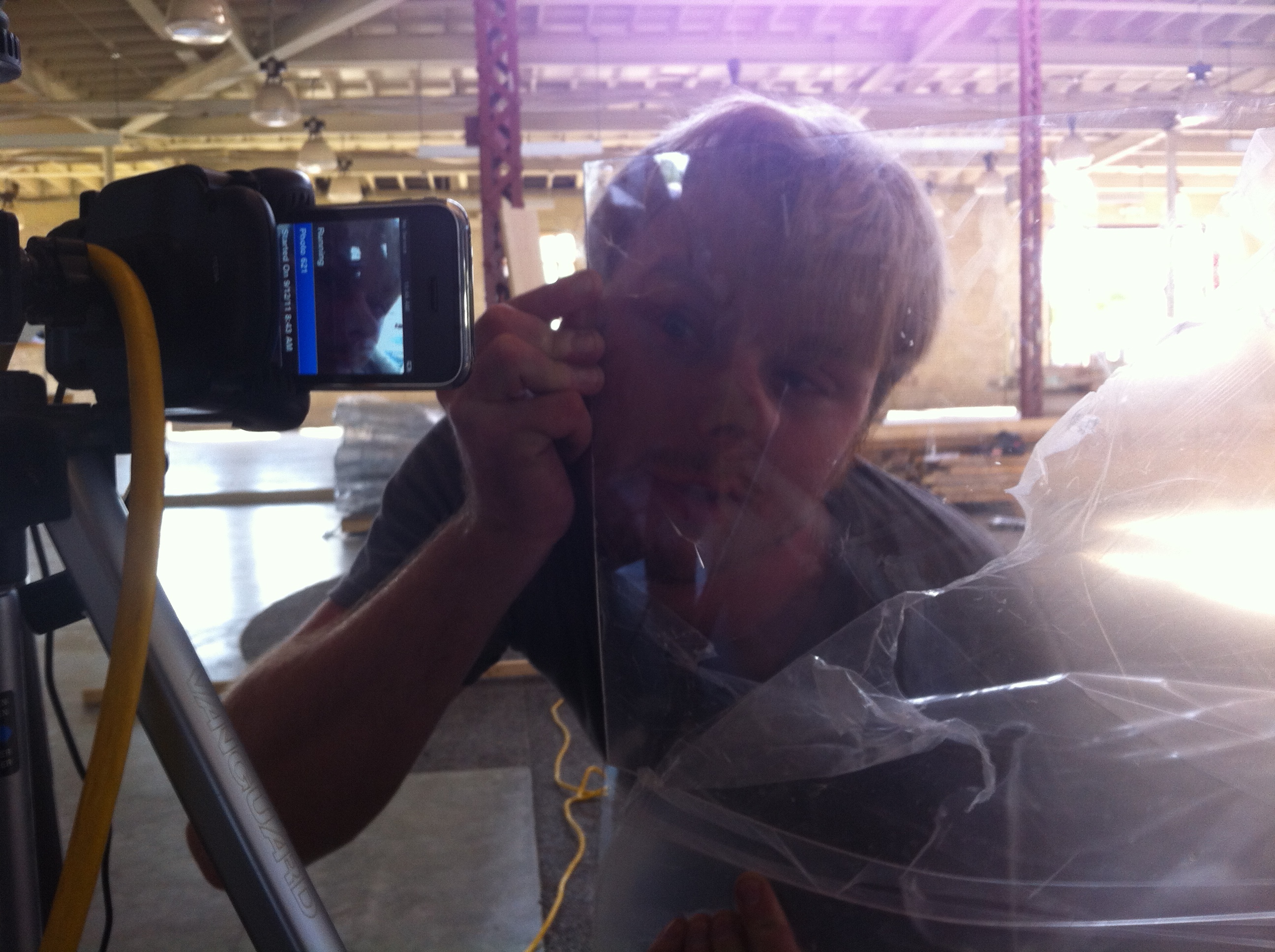
More time lapse fun
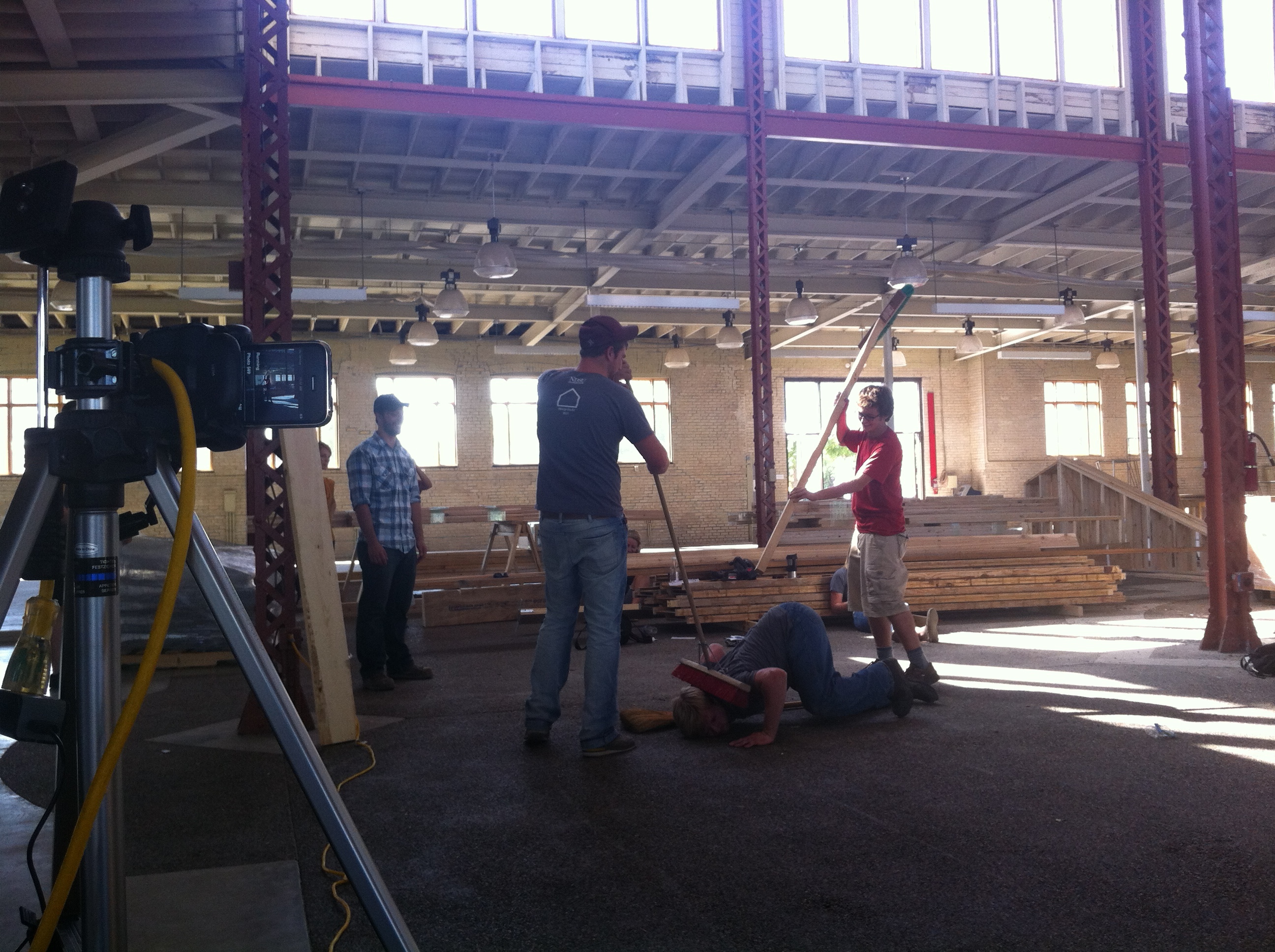
Having fun with time lapse
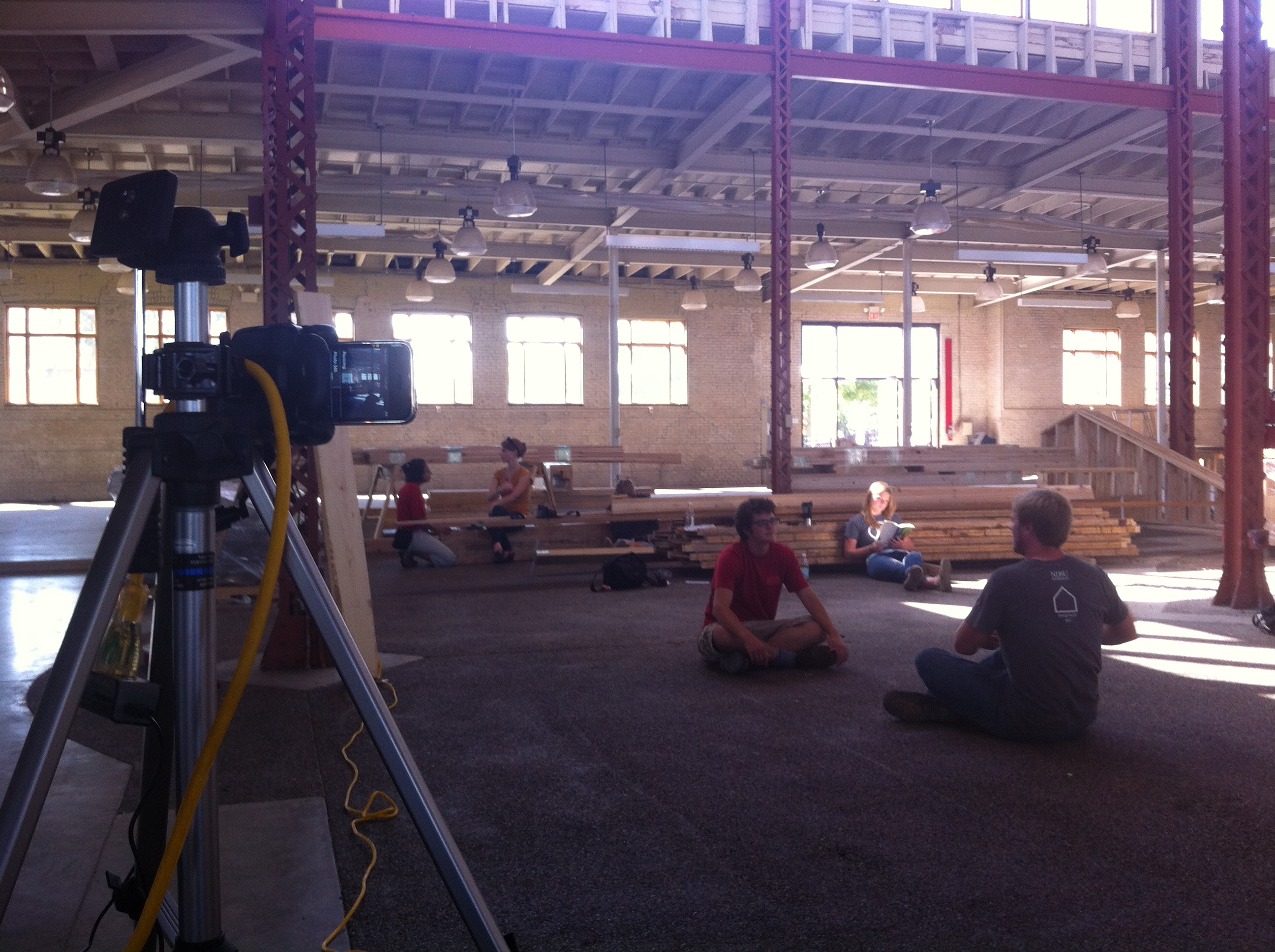
 NORTH DAKOTA STATE UNIVERSITY DESIGN BUILD